Sunday, December 20, 2015

Join us on 9 Innings Manager


The offseason is here, the Winter Meetings are over and many of the top tiered free agents are already off the board. What in the world are we going to do all winter long? Binge watch shows on Netflix? Catch up on school/work/house work? Spend time with family? Nah, probably not. Playing video games on your phone instead of doing school work or house work or your actual work is always an option though. I spend most of my time on 9 Innings Manager.

Basically you can draft players, trade players and build your team from an expansion team to the Major Leagues. You can fight for playoff spots, MVP Awards and face off against the AI or a friend. You are the manager though, you don’t actually get to play the simulation. It’s still fun though and I have built a pretty beast team. Join us!


Download the free app and search for HiveID DBurchHero to help us pass the time this winter. 

Dave Echols Appointed President of the Charleston RiverDogs

Echols promoted to President/GM; Mike Veeck named President Emeritus

CHARLESTON, SC – Marv Goldklang, Chairman and principal owner of the Charleston RiverDogs, has announced that Dave Echols has been promoted to President & General Manager of the club, effective immediately. Fomer club President Mike Veeck, who served as the RiverDogs’ president since 1997 and who guided the team during its most successful years, will continue his involvement with the team as President Emeritus.

“Dave has proven to be one of Minor League Baseball’s most talented and successful executives during his tenure as general manager and under his operational leadership, the RiverDogs have experienced unprecedented success,” said Goldklang.

“Dave is a true professional who has become an integral and influential member of the Charleston community outside the ballpark gates,” he added.  “We have every confidence that his transition to this larger role will be seamless and result in ever-deepening ties between the team and the Lowcountry.”

Echols, who held the title of Executive Vice-President & General Manager for the past two years and served as the team’s general manager since 2004, will continue to oversee all operations of the club. Under Echols’ leadership, the RiverDogs have been honored with multiple industry awards for excellence in promotions, marketing and ballpark operations and in 2015, established an all-time attendance record as 292,661 fans passed through the Joseph P. Riley, Jr. Park turnstiles.  Echols twice has been named Executive of the Year in the South Atlantic League.

Echols enters his 25th season in professional baseball, a career that began in 1992 as an intern with the Fayetteville (NC) Generals of the South Atlantic League.  During the course of his time in baseball, he has served in various capacities including that of director of marketing for the AAA Columbus (OH) team of the International League.

He joined the RiverDogs in 1999 as an assistant general manager, and departed in 2002 to become general manager of the Brockton (MA) Rox of the Northeast League, and was honored in 2003 as Executive of the Year of that league.  He returned to Charleston as general manager in 2004 and now begins his 16th season with the RiverDogs, this time as president.

“I am indeed apppreciative of the continued support of Marv Goldklang and everyone affiliated with The Goldklang Group,” said Echols. “Under Marv and Mike Veeck’s leadership, the RiverDogs have flourished, developing extremely strong roots in the community and making The Joe THE place to be.  I am both proud and honored to be handed the reins.”

Echols, 45, is a native of Delaware, Ohio and a graduate of the Universiyt of Dayton.  He and his wife, the former Debra Glenn, are the parents of a son, Logan, who is 4.


Veeck, son of legendary Baseball Hall of Famer Bill Veeck, will continue to teach sports management courses as a visiting professor at The Citadel, where he has been since 2008. He also remains involved with The Goldklang Group as president and co-owner of the St. Paul Saints in the independent American Association of Professional Baseball.

What are the New York Yankees Getting for Christmas This Year?


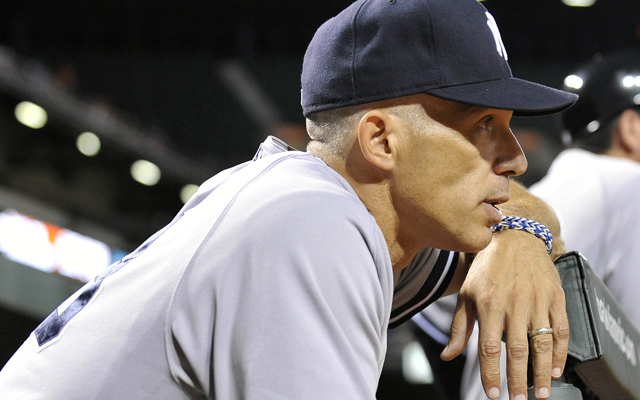
It’s almost that time, Christmas week has finally arrived. Have you been good or are you going to get coal in your stockings this year? To take it one step further what are the New York Yankees asking from Santa this Christmas season? I asked them just that question and here are their (fictional) answers:

Joe Girardi:
“I’m just asking for the health of my pitching staff and good seasons from Gardy, Birdy, Alex, Refy, Mac, Louie, Evo and Lindy.”

Alex Rodriguez:
“I’m just blessed to be here another season and I want to thank the Steinbrenner family, the New York Yankees organization, Randy Levine, the Yankees fans and family for the opportunity. I’m truly humbled, blessed and rich so I don’t have to ask Santa Clause for anything, I’m an independent woman.”

Robert Refsnyder:
*just stares at me in disgust and refuses to answer*

Chase Headley:
“The Chuck Knoblauch book on how to throw to first base. No really, I’m kidding. Please don’t bring me that, I’m inside my own head enough. Maybe a puppy?”

Mark Teixeira:
“A full and healthy season. Finally. It’s my contract year and Greg Bird’s eyebrows scare me.”

Greg Bird:
“For someone to step on a crack and break Mark Teixeira’s back… maybe? He needs a day”

Stephen Drew:
“Please sign me!”

Hal Steinbrenner:
“For people to stop calling the man writing the $200+ million check every single season cheap!”

Brian Cashman:
“He’s not cheap my ass. But for real though, just let me know when you’re recording because I’ve got this great politically correct line my grandfather always used to tell me growing up.”

Hank Steinbrenner:

“A carton of Newports and something to eat.”


Merry Christmas everyone and to those who don’t celebrate Christmas, Happy Holidays to you as well. 

If the Yankees Want to Trade An Outfielder….


The New York Yankees and their GM Brian Cashman are being aggressive this winter, maybe overly aggressive, in the trade market and have sent off a few key pieces from the 2015 squad already. Cashman has named a few other trade candidates including their closer Andrew Miller, a starting pitcher Ivan Nova and outfielder Brett Gardner. If the Yankees want to trade an outfielder this winter shouldn’t it be Carlos Beltran and not Gardner?

Carlos Beltran is 38-years old and will be 39-years old for much of the 2016 season. Beltran showed last season that his defense, and specifically his knees, are not what they used to be. Let’s not beat around the bush, if Beltran was average in right field defensively last season I would be extremely surprised. The good news for any American League team is they still have the DH position, the bad news specifically for the Yankees is that Alex Rodriguez will occupy that roster spot for the next two seasons. The Yankees could ride out Beltran for one more year, his bat is not one that forces his way into the lineup but he did lead the Yankees in batting average last season, but the team would love to be out of his $15 million commitment for next season. This also clears the path for Aaron Judge.

Judge may start the season in Triple-A regardless giving Aaron Hicks a chance in right field (assuming Beltran is traded of course) and either Slade Heathcott or Mason Williams the fourth outfielder job. Judge didn’t get much experience in Scranton last year and when he did he struggled mightily at the plate for much of the year. Judge could use some more seasoning at the upper levels for his own sake and for the betterment of the team. Either way Judge will be ready long before the Beltran contract is up and that’s a problem for New York.


I have mentioned it many times and while I don’t have anything concrete to back me up I think many would agree anyway. You can over-groom a prospect. At some point their development does a complete 180 degree turn and you begin to reverse the trend. I don’t want that to happen with Judge so if he is tearing the cover off the ball in May and June you may be forced to bring him up much like the team did this past season with Greg Bird. If not then you still have the security of Ben Gamel, Williams and Heathcott on the 40 man roster. Trading Beltran is a win-win, trading Brett Gardner is not. 

Chase Headley WILL Be Better in 2016


If you watched a Yankees game in 2015 there is a good possibility that the Yankees third baseman Chase Headley was in the game. Headley led the team in games played with 156 games in 2015 making him one of the more durable players on the team last season. If you watched at least one game in 2015 it is very likely that you also saw Headley either make an error or make a throw that would have been an error had Mark Teixeira or Greg Bird pulled it out of the air or the dirt. Headley was horrible defensively in 2015 and committed 23 errors but he should be much better in 2016.

Headley was considered an elite defender before coming to the New York Yankees in 2014. Earlier this week we discussed the Yankees infield defense for next season and we used the FIELDING stat, formerly known as dWAR, from Fangraphs and we will use it again here to make our case specifically for Headley. Keep in mind that no defensive metric is considered a “be all tell all” type stat like WAR is for batters or FIP, WHIP or ERA+ are for pitchers but it is as close as we can get in modern times. Headley’s FIELDING stat in 2015 was -3.0 which is not great but I truly believe this is just a blip on the radar. Keep reading.

In 2014 Headley posted a very impressive and almost staggering 20.4 FIELDING while in 2013 he was no slouch at the hot corner with a 7.0 FIELDING stat. If FIELDING is not the stat for you then how about an oldie but a goodie? Headley’s fielding percentage in 2013-2015 are here in order for your reference, .968, .975 and .946. Headley committed a total of 19 errors from 2013 and 2014 combined making his 23 errors in 2015 a bit of an anomaly for me.


Look, I believe in my heart of hearts that you just don’t lose it defensively at age 30 (he's 31 now). For every Chuck Knoblauch who just woke up one day and decided he couldn’t throw it to first base anymore you have thousands of other examples where players are at minimum adequate defensively late into their careers. Chase Headley will be fine ladies and gentlemen, it’s amazing what an offseason can do for a guy. 

Insider: Joe Girardi Concerned About Pitching Staff


Anthony McCarron of the New York Daily News reported recently that a source and Yankees insider told him that Joe Girardi was “concerned” about the Yankees pitching staff. I don’t think you need an insider, especially when you quote Girardi directly from an interview in your piece, to tell you that the Yankees have some question marks in their rotation this upcoming season. The good news is it’s not even Christmas yet and there is plenty of time to go.

Of course Girardi’s concerned, we’re all concerned. Masahiro Tanaka hasn’t had a full and healthy season inside a Yankees uniform and you always have his UCL and a potential Tommy John surgery on your mind. Michael Pineda has yet to have a full and healthy season with New York either after battling shoulder injuries and forearm inflammation and such over the past few seasons. Nathan Eovaldi was shut down last season with inflammation, Ivan Nova is in his second year removed from Tommy John surgery, Luis Severino may have an innings limit next season and CC Sabathia is battling alcoholism and a degenerative knee condition.

This is what makes the trades of Justin Wilson and Adam Warren, two trusted bullpen arms and a safety net for the rotation, even more puzzling. Cashman has a plan, he says he has a plan anyway, so I’ll just sit here and remain patient.

Have a great day Yankees family.


This Day in New York Yankees History 12/20: The American Idle


On this day in 2004 the Yankees signed Mr. Carl Pavano to a four year free agent deal worth $39.95 million. Pavano is coming off of an 18 win season with the World Series champion Florida Marlins and would make a total of 26 starts in his Yankees career.


Also on this day in 1973 the American League President Joe Cronin ruled that the New York Yankees could not sign manager Dick Williams. The Yankees announced a deal with the former Oakland manager just two days earlier.

Saturday, December 19, 2015

MLB’s New Frontier: No Injuries in the Game

From the USA Today. This article was too good not to share. Enjoy!

Baseball’s most renowned innovator believes the next frontier of analytics won’t be about changes to on-field performance so much as simply keeping players on the field.

“I think that everybody's looking for a competitive edge,” Colorado Rockies manager Walt Weiss said, “and that's an area where you may be able to find one.” Billy Beane, Oakland Athletics executive vice president of baseball operations, has been among the loudest voices touting injury prevention and medical treatment as the next major data-driven undertaking — and that movement is accelerating across the league as medical technology improves and the investment in player contracts increases.

Training and nutritional programs are individualized based on baseline physical evaluations, as well as a player’s age, position and handedness; further customization takes the calendar — offseason, spring training, early season, late season — into account.

Radar systems track a pitcher’s velocity and release point to gauge fatigue. Elbow sleeves log the strain of every throw. Functional movement screenings are routine tests. Biomechanics data can be delivered in real-time. Medical research papers on the epidemiology of common baseball injuries and based on a league-wide injury database are nearing publication.

In November, after an injury-ravaged roster fell short of an expected playoff berth, the Washington Nationals introduced a revamped medical staff and first-of-its-kind advisory board with new executive director Harvey Sharman, who oversaw the medical program at Leeds United, an English soccer club where analytics are more in use. At the press conference, general manager Mike Rizzo called it “maybe the next Moneyball,” summoning the imagery of the book that made Beane famous.

Mets head team physician Struan Coleman, an orthopedic surgeon at New York’s Hospital for Special Surgery, said research is in the works about the risk factors and corresponding preventive muscle strengthening exercises to avoid injury absences. Someday, that could result in better elbow protection and Tommy John surgery prevention.

“That’s the kind of thing that we’re working toward,” Coleman said, “and I think we’re going to get there.”

In an industry where revenues approach $10 billion, the average salary exceeds $4 million and the first $400 million player may be just three years away, there's ample motivation.

Prevention, not treatment

James Andrews, the internationally regarded orthopedic surgeon, founded the American Sports Medicine Institute in 1987 and, along with Ph.D. research director Glenn Fleisig, have helped revolutionize the field. The mission has always been about injury prevention and recovery, but in 2002, they had a revelation.

“We looked in the mirror and said that we’re really doing a lot more on the treatment side than the prevention side,” Fleisig said.

At that January’s annual baseball injuries seminar at ASMI, Andrews announced that their biomechanics lab was open for all business — in other words, that teams were encouraged to send all pitchers for testing, even the healthy ones, and not just those rehabbing injuries.

Around that time, Oakland A’s pitching coach Rick Peterson sent a few young pitchers — Tim Hudson and Barry Zito, among others — for analysis in February. That November, Zito won the American League Cy Young Award. “That was good for business,” Fleisig said.

Ball clubs are far more proactive now in tracking pitcher data. Peterson — who is fond of saying, “In God we trust; all others must have data” — is now director of pitching development with the Baltimore Orioles and has all of his minor league pitchers tested.

“The Orioles pitching development program is based on research and science from Dr. Andrews and Dr. Fleisig,” Peterson said, “and our motivation is to fully help every pitcher in this organization to bridge the gap between potential and performance.”

The company KinaTrax has developed 3D motion-capture technology to replicate the work of ASMI’s biomechanics lab in major league ballparks. KinaTrax is in discussions with 17 clubs; the Tampa Bay Rays will be the first to install the system, which dovetails with the progressive ethos of the organization’s medical and training staffs.

“They stay innovative — they are constantly at seminars,” Rays manager Kevin Cash said. “They are constantly trying to learn. They don't get in the mold, well, I've been doing this for 15 years and this is how we did it then. They challenge themselves daily to provide the most for our players.”

Motus Global uses small motion-sensor chips embedded in small pockets of compression clothes to track swing and throwing mechanics. The elbow sleeve measures torque in Newton meters while also logging arm slot, arm speed and a shoulder’s external rotation. Motus is used by 27 of the 30 major league clubs. (Fleisig sits on its board.)

The TrackMan radar that powers MLB’s StatCast data collection also plays a role in injury detection and rehabilitation.

“We know teams will shut players down if they see certain changes,” TrackMan Baseball general manager John Olshan said, adding that, conversely, some clubs will hold back a player in rehab until their pitching measurements reach a certain threshold: “They might not know why that’s happening, but they know that somehow the player is compensating.”

ASMI has also been at the forefront of instituting pitch counts in Little League and endorsing other safer arm-care guidelines through Pitch Smart, a joint effort of Major League Baseball and USA Baseball. With elbow injuries rising, that movement has received universal embracement.
“I watch TV — politics or sports — and how often do you say something and everyone agrees?” Fleisig said.

Rest, recovery, and ‘fingerprints’

The No. 1 cause of injuries is fatigue which, Cincinnati Reds medical director Tim Kremchek said, leads to a staggering 500% increase in their likelihood. Fleisig said a pitcher’s fatigue is often marked by stride shortening and elbow lowering. Th
ose changes can be nearly imperceptible to the naked eye, hence, all the tracking technology.
“When you fatigue, your biomechanics change,” said Kremchek, a leading Tommy John surgeon.
Many medicals staffs previously reacted to injuries and only gave lip service to the realization of baseball’s marathon season. That’s why, Coleman said, the HSS team made a big push on prevention by instituting more rest and recovery days in 2007 which, he said, “substantially” reduced the number of days Mets players missed to injury from one year to the next.

Diagnosing injuries early is essential to avoid worsening. That requires vigilance by the whole staff, as well as having a player’s healthy medical records on file, too.

“Each player has his own signature, baseline motion and strength analysis,” Coleman said. “It’s like a fingerprint.”

Starting with those thorough examinations, medical staffs can work on prospective studies by following players longitudinally.

“If someone has, say, decreased range of motion in their hip,” he said, “are they more likely to have a hip injury or a hamstring injury during the one season, during five seasons or in 10 seasons?”
Coleman said there’s been recent progress in reducing the number of shoulder injuries, due to heightened understanding of the joint’s mechanics, the need for stretching the posterior capsule to avoid internal impingement and improved MRI resolution to detect inflammation.

Medical teams have grown from a doctor and a trainer to dozens of physical therapists, trainers, strength and conditioning coaches. Minnesota Twins manager Paul Molitor, a Hall of Fame player from 1978-1998, said teams didn’t even have weight rooms when he started playing.
“We have gone from — when I started with the Reds 20 years ago — cursory physical examinations in the spring and letting him play,” Kremchek said, “to now individualized, customized programs from them. It’s very sophisticated.”

Among the advances, Kremchek said, are increased use of ultrasound to view muscles dynamically rather than static MRI images and more natural healing approaches. Especially in younger athletes, he said he’s less apt to use cortisone than platelet-rich plasma (PRP) or stem-cell therapies.
“We are very, very proactive in these types of regenerative medicine,” Kremchek said.


The statistics of baseball performance have been so finely studied and dissected that it’s becoming harder to find differentiating factors, so clubs are turning further attention to the field of sports medicine to minimize one particular statistic: disabled list stays.

MLB Hopes for Spring Training Games in Cuba in 2016


Major League Baseball started a mission to not only expand the sport of baseball but to expand the brand of Major League Baseball last year when Commissioner Rob Manfred took the reins of the sport from Bud Selig. Manfred has done just that and was aided a bit by the announcement from President Barack Obama that the United States and Cuba would begin discussing certain things with Cuba including lifting the embargo and working on diplomatic ties between the two countries. Immediately the MLB fan base wondered how this would affect the slew of players defecting from Cuba and coming to the United States to play MLB and how it could potentially affect games and/or franchises being there, even if it were just spring training games to start.

Major League Baseball acted quickly when learning of the news and now hopes to have spring training games in Cuba as soon as March of 2016. MLB has already sent ambassadors to the country including former Yankees manager Joe Torre and will also send a three-day goodwill tour there to begin talks for games and such in Cuba. The league has already gone as far as to say that the Tampa Bay Rays would be one of the teams selected to play in what would be a two-game series in Havana, Cuba’s capitol.

MLB hasn’t played a game in Cuba since 1999 when the Baltimore Orioles played two games against the Cuban national team. Cuban born players Jose Abreu and Yasiel Puig have joined the tour back to their native countries and will conduct clinics for children and a charity even with Caritas Cubana, a non-profit organization that provides assistance to the elderly, children, people with disabilities and people battling HIV and AIDS, while back in their native countries.


I cannot explain how excited I am for this. No words. 

Remembering Yankees of the Past: Scott Proctor


I was going through some emails that we receive from our awesome readers, hat tip to Betty for the idea for this article, and I opened an article about Scott Proctor. Proctor was one of the many arms that then Yankees manager Joe Torre “ruined” out of his bullpen. Remember, towards the latter part of his tenure with the club the Yankees were not winning World Series Championships annually like they did in the latter part of the 90’s and into the 2000’s and George Steinbrenner was livid. Steinbrenner was writing the biggest checks at the time and demanded greatness and in his mind that greatness started with the manager. Torre was managing every game for his job and stuck to using the relievers and players he trusted, one of those arms was Proctor. With that said we remember the Yankees reliever who threw in 80+ games multiple times in his career, the reliever that loved to hit Kevin Youkilis in a Red Sox uniform and the reliever that battled alcoholism for much of his ride along the way. Remembering Yankees of the Past, this is Scott Proctor.

Scott Christopher Proctor was traded to the New York Yankees along with Bubba Crosby for Robin Ventura on July 31, 2003 and New York immediately stashed their new weapon in Triple-A. Proctor was a closer for the Triple-A Columbus Clippers and was seen throwing 100 MPH or higher there which caught the eyes of the Yankees brass and manager Joe Torre. Proctor ended up making his MLB debut on April 20, 2004 against the Chicago White Sox as a mop up man. Proctor pitches 2.1 innings of relief and allowed two earned runs. Proctor’s results that season were not ideal but he quickly became a trusted weapon for the Yankees and even more quickly became a mainstay inside the Yankees bullpen.

Proctor pitched in just 26 games in 2005 before becoming the everyday guy we all remember in 2006 under Torre. Proctor led the league in 2006 with 83 appearances and often pitched for more than one inning or on consecutive days. Proctor joined Brian Bruney and Kyle Farnsworth as the Yankees bridge to Mariano Rivera. Proctor crossed the 80 appearance threshold again in 2007 leading GM Brian Cashman to confront Torre and Proctor about his overuse. To make a long story short Torre would ask Proctor if he was okay to pitch and Proctor would always say yes. Cashman wanted Proctor to be more open and honest with Torre before it was too late for his right arm, but it already was.

Proctor’s career took a turn for the worse after 2007 and it landed him off the Yankees and with the Atlanta Braves before the 2009 season. Proctor stayed with Atlanta through most of the 2011 season before the Yankees brought Proctor back on a new minor league deal. On August 13, 2011 the Yankees re-signed him and sent him back to Triple-A with the Scranton/Wilkes Barre RailRiders before calling him up on September 1st. Proctor pitched sparingly for the Yankees in 2011 before electing free agency and before he ended his tenure with the Yankees.

Proctor’s tenure with the Yankees was a roller coaster ride of sorts to say the least. Proctor caught some heat specifically with the Yankees after being accused of intentionally throwing at batters with the intention for retaliation, ask Kevin Youkilis of the Boston Red Sox. On June 1, 2007 Proctor plunked Youkilis in the shoulder after two Yankees batters had been hit. Youkilis was the fifth batter to be hit in the game and Proctor was ejected after both benches cleared and Youkilis had to be held back by then Yankees catcher Jorge Posada. Proctor protested that he did not intentionally hit Youkilis but was still suspended by the league after the incident for one-game. In other instance Proctor threw behind Seattle Mariners infielder Yuniesky Betancourt after his teammate Josh Phelps was hit by a pitch. Phelps was only hit after the Mariners catcher Kenji Johima was hit so Proctor incited another rally that had seemingly already been handled by the unwritten rules of the game. Another retaliation pitch and another suspension for Proctor.

When the Yankees and Scott Proctor knew he had a problem was on June 30, 2007 when he was seen lighting fire to his equipment on the field. Proctor has taken the loss in each of the last two Yankees games and was visibly upset after pitching poorly against the Oakland Athletics. It was then that Yankees closer Mariano Rivera too him under his wing and Proctor realized he had an alcohol problem. Proctor revealed in 2009 that he was a recovering alcoholic and credited Mariano with urging him to straighten his life out. Proctor began attending Alcoholics Anonymous meetings and seemingly turned his life around, although it was too late to save his career.


When all was said and done Proctor pitched for the Yankees, Dodgers, Braves and the Doosan Bears of the Korean Baseball Organization but he definitely made his name for himself and his mark with New York. Today we remember you Scott, hope you’re well.