Monday, November 2, 2015

MLBTR: Free Agency Profile for Jason Heyward


It's unlikely that New York makes a legitimate run at outfielder Jason Heyward but here is the original post anyway from MLB Trade Rumors. 


Jason Heyward hasn’t maintained the power output that many once predicted, but he’ll hit the market at a very young age while playing at quite a high level and should be paid accordingly.


Strengths/Pros

There’s a lot to like about Heyward‘s all-around game, as he rates as a positive in essentially every area. His tools are undeniable, and he’s turned them into tangible production in most regards.

Heyward‘s best single attribute might be his glove. Ultimate Zone and Defensive Runs Saved ledgers are filled with big numbers, as he’s consistently rated as an outstanding right fielder. Since he debuted in 2010, Heyward has easily paced all outfielders inaccumulated UZR (Alex Gordon‘s 68.3 UZR is second to Heyward‘s 96.2). Though his arm is more solid/good than great, he excels in the range department and isn’t prone to mistakes. Given his age and remarkable consistency, this is about as bankable a skill as one could hope to find.


Another often-underappreciated source of value is the basepaths, and Heyward excels there, too. He’s a fairly consistent source of twenty stolen bases, and more importantly, draws excellent overall marks. Indeed,Heyward ranked fifth in all of baseball in 2015 in Fangraphs’ BsR metric (the baserunning component of fWAR) and sits in the top thirty since his rookie year.

Heyward isn’t quite as outstanding with the bat — if he was, we’d be looking at Mike Trout‘s theoretical free agent case — but he’s hardly a liability. He’s reached base at a solid .353 clip and walked at a strong 10.8% rate for his career. Though Heyward‘s power has not returned to its peak 2012 levels (27 home runs, .210 ISO, .479 SLG), he’s significantly cut back on the strikeouts since and now sits at about a 15% K rate, well below the league average.

Having only just turned 26, it’s not at all out of the question that Heyward could still tap into some pop, particularly since he’s shown the ability to do so at the major league level. His HR/FB rate did land at 12.0%, near his historical norm, after it fell to 6.5% in 2014.

It’s also worth noting that Heyward has also continued to improve in the plate discipline department over the years, showing that he’s continuing to hone his craft. His chase rate and overall swing percentage have dropped every year since 2012, and his contact numbers have risen: in his most recent campaign, he posted a 93.8% in-zone contact rate.

By measure of wRC+, Heyward has been 18% better than the league-average batter over his career and was slightly north of that in 2015, when he slashed .293/.359/.439. He’s been a consistently above-average performer at the plate, apart from a fairly mild sophomore slump, and also shown the ability to hit the ball to all fields. All said, there’s a lot to like about Heyward at the plate.

But the biggest reason that Heyward‘s free agent guarantee will likely place at or near the very top of the market is his age. Though he’s already racked up six full years of MLB service, Heyward won’t turn 27 until next August, making him a rare free agent who still could have much of his prime ahead of him. For some context, consider that Alex Gordon — another top free agent corner outfielder this year — had his breakout 2011 campaign in his age-27 season. Gordon, one of Heyward’s chief competitors this winter, is a full five years older.

The total package makes Heyward one of the game’s best overall players. He hasn’t put up a single huge season, really, but consistently registers excellent campaigns. Somewhat quietly, he’s accumulated more fWAR since 2010 than any outfielder not named Trout, McCutchen, or Bautista. (He sits 11th overall among position players.)

That’s due in part, also, to his solid record of durability. Heyward has averaged 139 games and 572 plate appearances per year — good, but not great — but has mostly missed time due to bad luck (e.g., appendectomy, broken jaw).


Weaknesses/Cons

There’s really no broad area in which Heyward fares particularly poorly, but there are certainly some rather significant factors that hold down his value.

The power conundrum certainly rates at the top of the list. As discussed above, it is a huge question for him. His established 27-homer upside remains tantalizing. Were he a reliable source of 25 home runs, his earning power would be astronomical. But, that’s not how things have shaken out in recent seasons. Heyward’s isolated power hasn’t exceeded .150 in either of the last two years, and he hasn’t popped more than 14 long balls since his 2012 campaign.

As a result, some teams looking at the idea of committing huge money over a lengthy term will certainly feel some uncertainty. If you believe that Heyward has settled in as a 12-to-15 annual home run level of power, then any fall-off in his speed and defense could leave him as an even less exciting player than he already is. Two fairly recent, seven-year free agent deals with non-power-hitting, average-OBP outfielders — Jacoby Ellsbury ($153MM) and Carl Crawford ($142MM) — have fallen flat.

We discussed Heyward’s increasing contact tendencies above, and that does have some benefits (e.g., his improving strikeout numbers). But the list of elite contact makers is also riddled with slap hitters, and there are some concerns in Heyward’s batted-ball profile. Last year, his groundball/flyball ratio was way out of whack when compared to career norms. After consistently hitting in the range of 45% groundballs against 35% flyballs annually, Heyward saw his groundball rate shoot up to 57.2% while his flies plummeted to 23.5%. That could be a one-year blip, but it’s not the most encouraging sign to see so many balls hitting the ground.

Likewise, Heyward has traditionally struggled against left-handed pitching. He increased his output to about league-average in 2015, but he’s running a .230/.309/.351 batting line for his career. When weighing a decade-long commitment (or thereabouts), it’d probably be preferable not to be wondering whether and how soon you’ll need to find a platoon mate.


Personal

Heyward was born in New Jersey but grew up in Georgia and excelled there as a high school ballplayer. He wears the number 22 to honor the memory of his former high school teammate, Andrew Wilmot.

As Peter Gammons explored in an interesting 2010 piece, Heyward is the product of a well-educated and thoughtful family. Even as his son participated in competitive youth baseball, Heyward’s dedicated father made sure the focus remained on having fun. Even as he was just entering the big leagues, Heyward drew rave reviews from teammates, coaches, and scouts for his hard work, and he’s only enhanced that reputation since.

“I love to play. I love to play hard,” Heyward himself explained. “I try to play the right way. I was brought up by parents who taught me to treat everyone with respect, to treat them the way I want to be treated.”


Market

Heyward is a special free agent because of his age and consistent level of production. That his annual earning power isn’t exceptional could keep more teams in the hunt than might otherwise be the case, and of course some will see an opportunity to buy up still-undervalued skills.

It’s hard to completely rule out any large market clubs, because other roster moves could always be made to free space for this kind of opportunity. Organizations such as the Angels, Tigers, Giants, and Mariners have the means and, quite possibly, the need for Heyward. The Cardinals don’t generally chase top-of-the-market free agents, but just had him for a year and gave Matt Holliday big money under similar circumstances. There’d be a nice fit with the White Sox, Orioles, Astros, Royals, and Padres, if they’re willing to spend beyond their typical levels. Meanwhile, big spenders such as the Yankees — but also, theoretically, including the Cubs, Dodgers, Rangers, and Nationals — could make room for Heyward if they feel the opportunity is just too good to pass up.


Expected Contract

There’s a range of possibilities here, as always, but I’m guessing Heyward will command a longer deal at a slightly lesser average annual value. Ellsbury’s deal came at just under $22MM in AAV, and even Crawford cracked $20MM annually (five years ago). It’s hard to put Heyward in the same production bracket as Robinson Cano (ten years, $240MM), and you could argue that he’s not as valuable a free agent as wasPrince Fielder (nine years, $214MM), depending upon how one values defense and baserunning. But those signings show that super-length contracts at still-significant AAVs can be had.

It’s important to note, also, that Heyward looks like a prime candidate to negotiate an opt-out clause into his deal. Given his age, he’d probably see value in having the right to return to free agency after a reasonable stretch. (After all, as MLBTR’s Steve Adams points out, even five years from now Heyward will still be younger than Gordon is as he hits the market this winter.) And Heyward is represented by Excel Sports Management’s Casey Close, who has guided clients such as Zack Greinkeand Masahiro Tanaka to opt-out arrangements.

My prediction: ten years, $200MM.

Baseball America: 2015 Draft Report Card: Yankees


The great minds at Baseball American have released their final 2015 MLB Draft Report Cards now that the 2015 season is all but over. Many of the players drafted in the June draft are now in winter leagues and such but Baseball America released their report cards anyway. The pitchers are hidden behind the paywall but the positional players are free and seen below. If you have a subscription click HERE and check out the pitchers as well, I hear BA was quite nice to James Kaprielian. Enjoy.


POSITION PLAYERS


BEST PURE HITTER: The Yankees had strong belief in the hands and contact ability of 3B Donny Sands(8), and he rewarded them with a .309/.405/.364 debut in the Rookie-level Gulf Coast League.

BEST POWER HITTER: OF Jhalan Jackson (7) set a Florida Southern record with 20 homers in the spring and hit five more in his debut, as did OF Trey Amburgey (13). Both have big power that is not limited to pull side. OF Isaiah Gilliam (20) is the increasingly-rare switch-hitter with power from both sides. 

FASTEST RUNNER: OF Jeff Hendrix (4) consistently turns in 4.0-4.1 second times to first base from the left side, and his speed plays defensively in center field as well. 

BEST DEFENSIVE PLAYER: SS Kyle Holder (1) was the best defensive player in the draft class. He has body control, short-area quickness, a plus arm and easy actions, making him a potentially 70 defender.


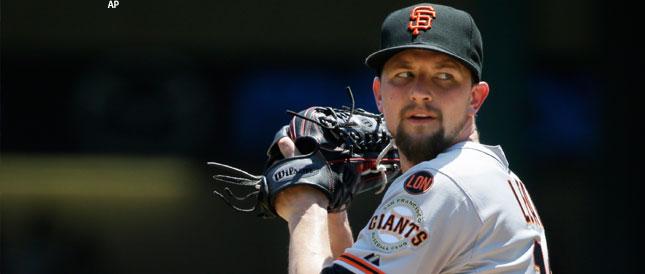
MLBTR: Free Agent Profile for Mike Leake


See the original post HERE


The Reds fast-tracked Mike Leake toward free agency by having him skip the minor leagues almost entirely, and he’s now poised to be one of the youngest free-agent pitchers in recent memory.


Strengths/Pros

The biggest positive for Leake heading into free agency is his age. Because the former No. 8 overall pick went straight from college ball to the Reds’ Major League rotation — with a pit stop in the Arizona Fall League along the way — he racked up six years of service time quickly. Leake doesn’t turn 28 until November, so the first year of his free-agent contract will come at a time when most comparably aged players are still two, if not three years removed from free agency. And, because he skipped the minors, his 1110 career professional innings are 170 innings fewer than the next lowest among his free-agent competitors (Marco Estrada).

For the second consecutive year, Leake posted a 3.70 ERA. That marks three straight seasons with a sub-3.75 ERA and at least 190 innings. All but two months of those three years came while pitching his home games at an extremely hitter-friendly home venue: Cincinnati’s Great American Ball Park. Leake was able to thrive in large part due to his excellent control (2.3 BB/9 for his career) and his strong ground-ball rate. Leake’s 50.2 percent career mark in that regard is impressive, and it’s ticked upwards over the past two seasons, now siting closer to 53 percent.

Leake’s mix of pitches is an interesting component of his free agent stock. Detractors can point to the fact that he doesn’t throw particularly hard, but his fastball has increased in average velocity each season, per Baseball Info Solutions. He’s also less reliant on that fastball than nearly every pitcher in the game; Leake’s 44.1 percent fastball usage was the seventh-lowest among non-knuckleballers this year, and he’s thrown it at just 45 percent in his career. Leake throws five different pitches at about 10 percent each, and you won’t find another starter who does that on a year-to-year basis. Four of those five pitches rated as above-average offerings this season.

Though he has just one season of 200-plus innings, Leake has been virtually injury free throughout his career. He landed on the DL late in the 2010 season with right shoulder fatigue but avoided the DL for the next five years, until a hamstring injury sidelined him for about two weeks in August. He dealt with some forearm tightness at season’s end, but it wasn’t serious and didn’t lead to major concern.

Leake batted quite well early in his career, and while he had his worst season at the plate in 2015, he’s an overall .212/.235/.310 hitter in the Majors. That’s obviously not good, relative to the rest of the league, but it’s not bad for a pitcher. Leake has six career homers and has hit a pair of long balls in each of the past two seasons. For NL clubs with interest, that’s a nice bonus element.

Because Leake was traded from Cincinnati to San Francisco, he’s ineligible for a qualifying offer. The same cannot be said for second-tier free agents such as Jeff Samardzija, Wei-Yin Chen, Ian Kennedy and Jordan Zimmermann — all of whom will likely require interested teams to surrender a draft pick upon signing.


Weaknesses/Cons

Leake is highly durable in the sense that he’s steered clear of the DL, but he’s not exactly a big innings eater. His career-high is 214 1/3 in 2014, but he’s never surpassed 200 otherwise. He’s young and durable, but teams will stop short of considering placing a “workhorse” label on him. Part of that is due to the fact that Leake is undersized for a pitcher. He’s listed at 5’10” and 190 pounds in the Reds’ media guide.

Perhaps more concerning for clubs is that in an age where velocity and strikeouts are being emphasized more than ever, Leake doesn’t bring either to the table. His career-best K/9 rate is 2014’s 6.9, and he averaged just 5.6 K/9 in 2015. Leake has added some life to his fastball each year, but this season’s 90.9 mph average still rated below the 91.7 mph league average for starting pitchers.

Leake has owned right-handed hitters over the past two seasons, but he’s had less success against lefties, and that’s been a trend throughout his career. He’s yielded a .274/.324/.444 batting line to lefties throughout his big league tenure. Some of that should be taken with a grain of salt, as those numbers aren’t park-adjusted, but that’s still the rough equivalent of Evan Longoria‘s 2015 batting line — hardly an ideal result.

Part of the reason for those struggles against lefties is that while he throws five pitches, Leake’s changeup is decidedly below average. The same pitch values linked to above indicate that Leake’s changeup has been a positive pitch in just one season (and not by much). Perhaps it helps keep hitters off balance, but the pitch should seemingly be scratched from his arsenal. Leake’s cutter also ranks as a negative for his career, though it was a good pitch for him in 2015.


Market

Leake’s age, clean bill of health on his right arm and lack of a qualifying offer will make him appealing to a number of clubs. The Giants are known to very much want to re-sign Leake, and the California native is open to remaining in San Francisco. However, the Giants will face competition.

The Diamondbacks have already been linked to Leake on multiple occasions, and he makes sense for any club hoping to bolster the middle of its rotation. That could include the Tigers, Orioles, Yankees, Cubs, Dodgers, Blue Jays, Marlins, Mariners, Rangers, and Twins.

Leake is a native of Fallbrook, Calif., which is about 56 miles north of San Diego, 75 miles south of Anaheim and 98 miles south of Los Angeles, so perhaps he’ll have some desire to latch on with one of the Southern California teams, if they show interest. However, Leake also played college ball at Arizona State, whose campus is all of 10 miles from Chase Field. It’s not hard to imagine him having interest in returning to the area, and the D-Backs are reportedly interested.


Expected Contract

Four years has been the going rate for the market’s top secondary arms in recent seasons, with Ervin Santana, Matt Garza, Ricky Nolasco, Ubaldo Jimenez,Brandon McCarthy and Jason Vargas all serving as examples. However, each of those pitchers was at least two full years older than Leake at the time they hit the open market. Leake’s skill set doesn’t necessarily leap off the page and lead to visions of five- and six-year contract offers, but teams will undoubtedly recognize that they’re buying far more of a pitcher’s prime than they would with virtually any other free agent arm.

As such, five years seems not only possible but likely for Leake and his representatives at the Beverly Hills Sports Council. That’s an atypical number of years for a starting pitcher based on recent markets, as Leake would become the first pitcher in three years to ink a five-year pact (Anibal Sanchez, 2012). Typically, it’s a four-year ceiling for the second-tier of arms and a minimum of six year’s for the market’s truly elite, but there’s a stacked crop of starting pitchers this offseason, and Leake isn’t your average free agent due to his age.

Rick Porcello — a similar pitcher to Leake in terms of both age and skill set — recently commanded $20MM per free agent year on an extension with the Red Sox. That huge annual value, however, came when Porcello was younger than Leake and also was somewhat of a trade-off for keeping the term of the contract to four years. That deal serves to emphasize the value that teams will place on young arms, even if they’re not traditional power pitchers that can rack up a strikeout per inning. Because he’ll command a term of at least five years on the open market, Leake won’t be able to make that trade-off for the higher annual value, but he should still do well for himself. I’m predicting a five-year, $80MM contract.

Weekly AFL Check In: Gary Sanchez


The last time we checked in with Gary Sanchez the Yankees top catching prospect was smashing the ball down in Arizona with the Surprise Saguaros. Since our last check in Sanchez has continued to rake and even won the Arizona Fall League Hitter of the Week Award for last week. Can Sanchez keep that up this week? Honestly, he probably can. Let's see what he has worked with to date:

Gary Sanchez

Games: 10
At Bats: 44
AVG: .386
OBP: .404
SLG: .818
OPS: 1.222
H: 17
HR: 5
RBI: 15
BB: 2
K: 6

This Day in New York Yankees History 11/2: A Legend is Born!


On this day in 1985 a great Yankees fan Daniel Burch was born in Lebanon Hospital in the Bronx, New York. He would go on to co-own and create the "greatest Yankees blog ever" in his own very humble and biased opinion. Hey it was a slow day in New York Yankees history, sue me.

Also on this day in 1964 the Columbia Broadcasting System becomes the first corporate owner of a Major League Baseball team when they bought 80% of the New York Yankees. Dan Topping and Del Webb sold the stake in the Yankees for a staggering $11.2 million at the time. The Yankees would reward CBS with a sixth place finish in the American League and a second place finish in the American League East in their first year of ownership with a 77-85 record.

Sunday, November 1, 2015

World Series Game 5 Open Thread


My birthday is tomorrow and I'm too old to stay up all night drinking. You know what I'm doing? Going to bed, very soon actually. Every Sunday I get up early with my boys, cook them breakfast and enjoy the morning while letting the wife sleep in. That's my plan again this weekend so I leave you with this open thread for the night. Enjoy, you never know when you can't enjoy again.

My 2015 AL & NL Gold Glove Award Predictions


The player I think will win the award is bolded below. Leave yours in the comments section.


AMERICAN LEAGUE

Pitcher: Mark Buehrle (Blue Jays), Sonny Gray (A’s), Dallas Keuchel (Astros)

Catcher: Jason Castro (Astros), Russell Martin (Blue Jays), Salvador Perez (Royals)

First base: Eric Hosmer (Royals), Mike Napoli (Rangers), Mark Teixeira (Yankees)

Second base: Jose Altuve (Astros), Brian Dozier (Twins), Ian Kinsler (Tigers)

Third base: Adrian Beltre (Rangers), Evan Longoria (Rays), Manny Machado (Orioles)

Shortstop: Xander Bogaerts (Red Sox), Alcides Escobar (Royals), Didi Gregorius (Yankees)

Left field: Yoenis Cespedes (formerly Tigers), Brett Gardner (Yankees), Alex Gordon (Royals)

Center field: Kevin Kiermaier (Rays), Kevin Pillar (Blue Jays), Mike Trout (Angels)

Right field: Kole Calhoun (Angels), J.D. Martinez (Tigers), Josh Reddick (A’s)


NATIONAL LEAGUE

Pitcher: Jake Arrieta (Cubs), Gerrit Cole (Pirates), Zack Greinke (Dodgers)

Catcher: Yadier Molina (Cardinals), Buster Posey (Giants), Wilson Ramos (Nationals)

First base: Brandon Belt (Giants), Paul Goldschmidt (D-backs), Adrian Gonzalez (Dodgers)

Second base: Dee Gordon (Marlins), DJ LeMahieu (Rockies), Brandon Phillips (Reds)

Third base: Nolan Arenado (Rockies), Matt Duffy (Giants), Todd Frazier (Reds)

Shortstop: Brandon Crawford (Giants), Adeiny Hechavarria (Marlins), Andrelton Simmons (Braves)

Left field: Starling Marte (Pirates), Justin Upton (Padres), Christian Yelich (Marlins)

Center field: Billy Hamilton (Reds), Andrew McCutchen (Pirates), A.J. Pollock (D-backs)

Right field: Curtis Granderson (Mets), Bryce Harper (Nationals), Jason Heyward (Cardinals)

The Damon Runyon 5K at Yankee Stadium in November


The 7th Annual Damon Runyon 5K at Yankee Stadium comes to the Bronx, New York on Sunday, November 15. The Damon Runyon Cancer Research Foundation will host the event and 100% of the proceeds go directly to cancer research and cancer scientists.

The 5K course runs throughout Yankee Stadium including up the stairs between the levels, twice around the warning track and through the stadium’s concourses and ramps. Runners will be showcased on the center field video board and will be allowed to meet the scientists funded by Damon Runyon in November.

You have children? No problem, the Damon Runyon Cancer Foundation has also kicked off the Kinds Fun Run event allow children between the ages of five and 12 years old to take one lap around the warning track before the actual 5K begins.


Brett Gardner will be the event’s Ambassador. The Kids Fun Run starts at 9:00 am, opening remarks and kickoff starts at 9:25 am with the actual 5K starting at roughly 9:30. Registration is $60 through November 5th and the entry fee for children is $25. Visit runyon5k.org or email runyon5k@damonrunyon.org for more details. 

Bring Me Alex Anthopoulos


I have written a lot of these “Being Me so and so” posts before regarding free agents but I cannot say that I have ever written one about a member of a front office before, until now. News broke earlier this week that the Toronto Blue Jays offered an extension to their GM Alex Anthopoulos but the extension was ultimately turned down making Anthopoulos a free agent of sorts. The Yankees have an assistant GM position open, think Anthopoulos would bite on it?

This is a long shot, so was signing Don Mattingly to be the team’s bench coach (with some maneuvering) or hitting coach, and a demotion of sorts but the Yankees absolutely have to make the call. New York tried to lure Ben Cherington to the dark side after he stepped down as the GM of the Boston Red Sox and they absolutely have to do the same with Anthopolous. Anthopoulous is the man that is credited with building and developing the Toronto Blue Jays as they stand today. Anthopoulos, like Dave Dombrowski, has never shied away from trading big time prospects for established veterans and basically emptied the Blue Jays farm this summer for basically an ALDS championship but would not have that sort of power and pull here in New York.

Anthopolous could work under Cashman and presumably take over as the GM for the Yankees whenever Brian decides to hang it up or move on to another era in his lifetime. I have said many times that I personally thought that Anthopoulos was the best GM in Major League Baseball, and this was before he pulled off deals for Troy Tulowitzki, David Price and Josh Donaldson, and I personally would love his will to win here in New York.

It is a long shot, why would he turn down an extension with a team that is expected to be a power house once again in 2016 to take a position with a team with widespread change on the horizon, but it’s a shot worth taking in my opinion. I’m not holding my breath for Anthopoulos but I’m jumping for joy if the Yankees bring him into the organization.


Get On With It!


Coming from a baseball fan that might sound weird. I mean, more baseball should be a good thing? Right? Well, I'm as big a Yankees fan as you'll find, so when the Yankees are no longer playing my love for the game does take a hit. 

Don't get me wrong, it's been fun watching the postseason, and seeing a team like the Royals one win away from the title is cool. I guess it's because there's nothing about the Royals that I don't like. Other than the fact they aren't the Yankees, of course.  But I'd be lying if I didn't want it to be over with, because the sooner the World Series ends the sooner the offseason starts, and the Yankees can start to make improvements for the 2016 season.

However, I'm afraid this offseason is either going to be awesome, or it's going to be a big disappointment. For right now I just don't see any in between.

Let's start with the "disappointment" part.

The last time the Yankees spent a lot of money during the offseason we saw some big contracts come off the books. Between Robinson Cano, Curtis Granderson, Andy Pettitte, Kevin Youkilis, Mariano Rivera, and Phil Hughes, the Yankees had over $71 million coming off the books after the 2013 season. What did they do the next year? They paid Masahiro Tanaka, Jacoby Ellsbury, Brian McCann, and Carlos Beltran just over $75 million.

That didn't turn out too well, huh?

We saw the same thing at the end of the 2008 season, when Jason Giambi's, Bobby Abreu's, Mike Mussina's, and Carl Pavano's contracts were up. That was when the team agreed to spend over $400 million for CC Sabathia, Mark Teixeira, and AJ Burnett.

So how much payroll will come off the books for the Yankees between last season and next? A whopping $17.5 million (Chris Capuano, Stephen Drew, Garrett Jones, and Chris Young are free agents). And that doesn't take into account possible arbitration raises for Nathan Eovaldi, Ivan Nova, Michael Pineda, Esmil Rogers, Adam Warren, Justin Wilson, and Didi Gregorius.

So there's one reason to be pessimistic about the Yankees making a big splash this offseason.

And then there's the fact that the Yankees roster is basically full. Losing Capuano affects nothing, as the team has plenty of pitching (how good or bad it is is a different story). The Yankees have Dustin Ackley and/or Rob Refsnyder to replace Stephen Drew at second base. And as for the losses of Jones and Young, I don't count filling bench spots as "big" moves. 

So how could I, one of the more optimistic writers when it comes to the Yankees, believe the team will make big improvements for next season?

Well, I admit that the chances of that happening roam around somewhere between "slim" and "none". They would have to open up roster spots by trading away guys. For example, I'm not the only person on the "sign Jason Heyward" bandwagon. However, the Yankees outfield is full with Brett Gardner, Jacoby Ellsbury, and Carlos Beltran (who should probably DH, if it weren't for Alex Rodriguez). The latter two players are not going to get traded, meaning the Yankees would have to find a taker for Brett Gardner. Honestly, that wouldn't be that difficult, as Gardy can play strong defense anywhere in the outfield (including the all-important centerfield), and at least be a solid lead-off hitter.

But would the team do that? Even though he was far from great in 2015, Brett still outplayed his contract by quite a bit (he made $12 million, while Fangraphs had him worth $20.4 million). The Yankees may also still believe he and Jacoby Ellsbury could be a vicious 1-2 punch atop the lineup. I don't... but they might.

I'm not going to give up on that idea, though. 

Nor am I going to accept that the team doesn't want to increase payroll. While I accept that the Yankees still want to get under the luxury tax someday, 2016 should not be the year to do it. The free agent market after this year is far from great, so biting the bullet and going with a higher payroll next year is the way to go. After next season Teixeira's and Beltran's combined $38 million to go away, the year after that Rodriguez's and Sabathia's* $46 million goes b-bye.

*I see Sabathia's option for 2017 vesting.

So as much as I'm looking forward to this offseason getting underway for the Yankees, I'm afraid that by Spring Training of next season they will have done little to nothing to improve. But there's nothing wrong with staying positive, right?