Showing posts with label Fangraphs. Show all posts

Monday, February 25, 2019

Yankees Sign Hicks to 7-Year Deal Worth $70 Million


The New York Yankees have signed Aaron Hicks to a new seven-year deal worth $70 million that will begin in 2019 and keep the switch-hitter in Yankees pinstripes through his age 35 season. There is also a club option for an 8th season. The deal runs from age 29 until Hicks is 35, 36 if the club option is exercised.

Here is a breakdown of what the deal looks like:

2019 - $6 million salary, plus $2 million signing bonus
2020- $10.5 million
2021 - $10.5 million
2022 - $10.5 million
2023 - $10.5 million
2024 - $9.5 million
2025 - $9.5 million
2026 - $12.5 million club option or $1 million buyout

Hicks does not receive a no-trade clause, but gets $1 million in bonus money if traded

FYI, according to Fangraphs and their "value" stat, Hicks was worth a $26.4 million contract in 2017 and worth a $39 million contract in 2018... and the Yankees just got him for $10 million a season.

Friday, January 11, 2019

DJ LeMahieu and Hitting Inside Yankee Stadium (And Outside of Coors Field)


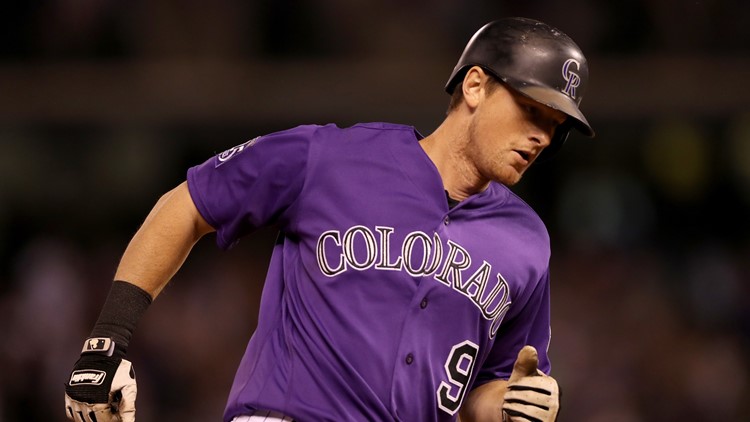
The New York Yankees signed second baseman and former Colorado Rockies hitter DJ LeMahieu today to a two-year deal rumored to be around $24 million. Presumably, LeMahieu will be the Yankees starting second baseman on Opening Day 2019, assuming health of course, but New York has already been quite vocal about DJ’s ability to play all over the infield. The Yankees pretty much know what they are going to get from LeMahieu defensively, DJ is a multiple-time Gold Glove winner as well as a 2018 Fielding Bible Award winner at second base in the National League, but do they know what they are going to get from their new second baseman offensively? Do the fans who are already crucifying LeMahieu and Yankees GM Brian Cashman know what they are going to get from LeMahieu offensively, aside from his splits inside Coors Field? No, they don’t, but thanks to Baseball Reference and Fangraphs we can make an educated guess at what to expect from the latest “DJ” inside the Yankees infield.


 Looking at LeMahieu’s spray chart and hit chart, courtesy of Fangraphs, you can see that DJ has surprising fly ball and line drive power to all fields, but especially to right field. This is especially important for a player that plays 81 of his games in the Bronx and inside Yankee Stadium. Many fans were quick to point out LeMahieu’s splits at home and away from Colorado’s Coors Field, but none of them even considered what it would be like hitting in the traditionally hitting friendly stadiums throughout the AL East.


 Yes, DJ LeMahieu benefited from hitting inside Coors Field for 81 games a season, but do you really think he benefited just as much hitting inside San Francisco’s spacious AT&T Park? What about San Diego’s Petco Park? I would think these stadiums would hurt his road stats more than they would help him. Equally, I would think playing those 10-12 games in each stadium inside Boston’s Fenway Park, Baltimore’s Oriole Park in Camden Yards, Tropicana Field down in Tampa, and the Rogers Centre in Toronto would help him tremendously with his home/road splits. Keep in mind, the below spreadsheet does not factor in the team’s performance and talent levels, obviously facing a stacked Boston Red Sox team is different than facing a 96-loss San Diego Padres team in 2018, but it only factors in the dimensions of every park and projects what he could do in 2019. While we are on the subject, though, the AL East won a combined 418 games (including the Yankees 100 wins which takes it down to 318 wins as LeMahieu is now a Yankee) while the NL West won a combined 404 games (including 91 by the Rockies bringing the number down to 313 wins) which goes to show you the potential level of competition LeMahieu may face in 2019 in the AL East. Teams like San Diego, San Francisco, and the Dodgers are all trying to get better while LeMahieu arrived just in time for a rebuild down in Baltimore and Toronto, with Tampa Bay on the cusp of competing again in my opinion.


As you can see, and I tried to keep this as simple as I could for simplicity’s sake, LeMahieu will surely benefit from playing in smaller ballparks throughout the AL East Division, including Yankee Stadium where he can torment opposing pitchers by using the short porch in right field. Yes, despite what the dimensions say the ball really flies out of and carries inside Coors Field, but at the same time we all know, again despite the dimensions, that AT&T Park and that huge wall in right field as well as Petco Park play a lot bigger than what the dimensions may suggest. In my opinion, keeping in mind that LeMahieu not only has to stay healthy but also has to put the barrel of the bat on the ball, what DJ loses by playing outside of Coors Field he will more than make up playing inside Yankee Stadium and the other four ballparks in the AL East.


Yes, LeMahieu has some ugly stats away from Coors Field, but that doesn’t mean that we are automatically going to see that player with the Yankees in 2019. You also have to factor in that LeMahieu will not only be playing his home games inside Yankee Stadium, but that he will also be playing his road games in traditionally hitter-friendly ballparks within the AL East. LeMahieu, and the New York Yankees, will be fine. Yankees fans have to know that, and they have to truly believe it as well.

Put me down for 20 HR and 100 RBI.

Saturday, September 9, 2017

My Thoughts on Aaron Judge, The “Worst Player in MLB” Right Now


Back on July 20th an admittedly tongue-in-cheek article was posted with the title “Aaron Judge has become the worst player in baseball.” This article was posted seven games into the second half and barely a week after Judge had put on a show at the All-Star Game and the Home Run Derby bringing home the title to the American League and to the Bronx. The article was done with a bit of sarcasm, and I can appreciate that as I tend to do that a lot in my own writing, but now some people out there, so-called fans, are all over Judge because of his second-half slump. Here are my thoughts on that for all the haters out there, and the supporters as well.

First and foremost Judge was never the type of hitter to hit like he was in the first half and was due a natural regression. Anyone who thought Judge was going to chase down Barry Bonds’ single season home run record while flirting with the .400 mark or even a high .300 batting average is not only crazy but they also didn’t pay attention to Judge while at Fresno State or throughout his minor league career with the Yankees. Judge is not without his faults, I admit that, and he has been and always has been a better hitter than the .183/.350/.355 hitter in the second half but there may be a few reasons why he has struggled so mightily.

Do you believe in the whole thought process that the Home Run Derby is cursed and it tends to mess with the winner’s swing for the remainder of the season? I don’t personally, not with the number of coaches and hitting instructors in the league, but I don’t believe in the Madden curse either. Some do though and I would never completely discredit their opinion or thoughts on the matter. There’s definitely some evidence if you want to cherry pick stats and such but nothing is 100% and you can’t predict baseball so I’ll leave that theory at that.

Judge had a .426 BABIP and a 41.7 HR/FB rate before the All-Star break showing that an obvious, and steep, regression was due for the Yankees slugger. Also factor in that Judge is seeing less fastballs, more sliders (23.9 of the time Judge is seeing a slider which is up from 20.3 % in the first half), less strikes and has been chasing more pitches you can see why Judge may be struggling. Judge is only seeing 38.3 % of the pitches thrown to him actually in the strike zone in the second half while his chase percentage is up to 30.1% in the second half. Judge is seeing less strikes and is trying to do more by chasing bad pitches off the plate, that’s a rookie mistake. There’s that word again, rookie. 25-year old rookie at that.

Many, no one more loud that Bryan Hoch though, are also speculating that Judge has an apparent shoulder injury that he is playing through and hiding from the media. In a report by Hoch it was stated that Judge has been repeatedly receiving extra treatment on his left shoulder since the beginning of August. Giving a slugger a shoulder injury can explain opening up too early on his swing, swinging and missing more which his stats say that he is, and not making as solid contact as he was in the first half. The injury theory may actually be the most valid and feasible theory of them all and knowing Judge like I think I know Judge I can see a lot of Derek Jeter in him. Judge is not going to want to come off the field and Judge is not going to want to tell the media that his shoulder is the reason for his struggles.

In closing, just chill. Judge is who Judge is. The Yankees are here due in large part to what Judge has done this season and specifically in the first half. This is a team game and it takes all 25, not just the man wearing the #99 Yankees jersey. Let’s remember that and let’s keep that in perspective before we start putting our opinions out there because it has boggled my mind to see some of the hate and condescending tones on Twitter and such regarding Judge and his recent performance. This kid is a rookie and the hardest thing to do in the world is to hit a Major League pitch. If you guys and girls can do better than by all means, have at it. I’d love to see the Yankees win a few more games. If not…. Shhhhhhh. Thanks for reading!


Saturday, August 19, 2017

Pitching Wise, Are the Yankees Worth it?


Hey guys and girls, it’s me again back with the same question. Are the Yankees worth it here in 2017? Earlier in the day we took a look at the offensive players and now we will look at the pitching. The Yankees had a ton of money sitting on the disabled list this week in Masahiro Tanaka and CC Sabathia so now seems like as good of a time as any to see if those two and their fellow brothers in arms have been worth it here in 2017. Again I will be referencing Fangraphs “value” and WAR stats and comparing them with the players actually salary from 2017, not their AAV.


Remember that these stats being used are cumulative so the fact that David Robertson has not exceeded his base salary with his Fangraphs “value” doesn’t mean that he won’t. Also I went ahead and included Jaime Garcia’s three teams and both the teams’ stats for Sonny Gray, Tommy Kahnle and David Robertson since including just the Yankees statistics would be too little of a sample size to look at in my opinion. Take them for what you will with that in mind. 

Friday, March 3, 2017

The Devil You Know vs. the Devil You Don’t featuring Miguel Andujar and Manny Machado


You know the old saying “the devil you know vs. the devil you don’t” well that sometimes applies to Major League Baseball as well as your regular, everyday life. This is especially true when you consider teams who play in huge media markets like the New York Yankees. Sometimes the devil you know, the player who may be average or a solid player but can handle the bright lights and big city, can be the better choice than the devil you don’t know, or the player who lets the media circus and the fans constant cheering and boos affect them. We’ve seen it far too many times, see Randy Johnson as an example of someone who buckled under the pressure while we have players like Alfonso Soriano and Brandon McCarthy who seemingly flourished in the Bronx, and we may see it again here in a few seasons when the likes of Bryce Harper and Manny Machado hit the free agency market. For the sake of this post we will focus on the latter and not the former and ask the question, by the 2019 season will the Yankees have the devil they “know” in prospect Miguel Andujar as their third baseman or the devil they don’t in Machado on Opening Day? 

Over the last two seasons Machado has put up an average triple slash of .290/.351/.518 with 36 home runs, 91 RBI, 35 doubles and 104 runs scored. That’s an average… not the total. Only Mike Trout the 2016 AL MVP Award winner, Josh Donaldson and Kris Bryant the 2016 NL MVP Award winner have had a higher WAR in that same span according to Fangraphs. In a nutshell Machado has been amazing over the past two seasons and he is somehow still just 24-years old. Any team would love to have a Gold Glove winner at shortstop that is capable of playing shortstop in a pinch and any team would love to have another big bopper in the middle of their lineup, which is going to make him extremely expensive. Would New York dip their foot into the deep end of the free agent market again for Machado in the winter before the 2019 season or would they simply see what they have in Andujar and continue their youth movement? 

Andujar had a pretty good 2016 campaign himself, albeit while splitting time between the High-A Tampa Yankees and the Double-A Trenton Thunder but still, putting up a .273/.332/.410 triple slash with 12 home runs and 83 RBI in his age-21 season. Andujar, who enters his age-22 season in 2017, did enough to warrant the Yankees adding him to their 40 man roster as the organization now sees him as the third basemen of the future. Maybe. I say maybe because Andujar is still considered raw by many accounts but almost every one of the Yankees scouts have had nothing but exciting things to say about his untapped potential and his attitude towards the game. Projections state that Andujar, much like we see now with Machado, will hit for average, hit for power and use the whole field when he reaches the Major Leagues and reaches his full potential. 


It is impossible to say with any certainty what the Yankees are going to do two seasons from now as a lot can happen between then and now and a lot can change as well. If the past is any indicator of the future though it seems like Hal Steinbrenner and his fiscally responsible ways will be quite confident with having Andujar, and not an extremely expensive Machado, at the hot corner on Opening Day 2019. Just a hunch though. 

Thursday, August 18, 2016

Are the Yankees Worth It? The Offense


Have the 2016 version of the New York Yankees been worth it? Boy I don’t tend to ask the easy questions to answer, do I? What’s the fun in that? If I stuck to the script and didn’t say anything you coulnd’t already find on River Ave, Bleeding Yankee Blue or LoHud you probably wouldn’t come here so that’s why I keep pushing the envelope and trying new things. Today’s new thing I’ll try is to try to equate, based on stats like WAR, “Value” and by their current salaries, if the Yankees players have been worth their contracts in 2016. Is this a tell-all post with tell all stats? No, absolutely not. There isn’t a tell-all stat or post but this should at least get you thinking about it and give you a good idea how good some players have been this season and how some players need to step it up a bit.


It’s hard, even with this graph, to really decide whether the Yankees have been worth it this season. After scoring the second most runs in the league in 2015 you would think they would be at or near the top again this season after taking out Stephen Drew, adding Starlin Castro and after giving players like Didi Gregorius another year under his belt but it seems like the stats tell another story entirely.

The offense isn’t the only area of the team under the microscope today so be sure to check back later for the same post just only with the Yankees pitching.


*all stats are stats accumulated with the Yankees only, not a previous or new team. 

Monday, May 2, 2016

ICYMI: Brian Cashman CANNOT Rely Solely on Alex Rodriguez and Mark Teixeira

I hate being right but dammit, when I am right I am usually right. Thus far, again it's only May 2nd, it looks like I was right back in November when I wrote this little article below. In the article it stated that the New York Yankees and Brian Cashman could not solely rely on Alex Rodriguez and Mark Teixeira in the middle of their lineup if they plan on competing in 2016. Long story short the Yankees didn't make any significant moves to the offense other than Starlin Castro, who has been hitting at the bottom of the order for much of the season, and the Yankees offense in struggling. Can't say I didn't warn you although I'm not ready to say I told you so... yet.


The New York Yankees made the postseason for the first time since their 2012 loss in the ALCS to the Detroit Tigers this past season and if the team wants to return improvements will need to be made. Much of why the team made the postseason as the first Wild Card winner in 2015 was the returns of a healthy Mark Teixiera and an effective Alex Rodriguez. The Yankees were flying high until the month of August when Rodriguez’s production, undoubtedly due to fatigue after basically missing the last two seasons with injuries and a suspension, and Teixeira’s health, he fractured his shin and missed the remainder of the season, reared their ugly heads. I’ll say it again, if New York wants to return to the Promised Land in 2016 they absolutely cannot rely solely on the returns of Alex Rodriguez and Mark Teixeira in the middle of the lineup.


In 2015 Rodriguez finished with a .50/.356/.486 triple slash playing in 151 games. Rodriguez hit 33 home runs but it was obvious that the fatigue had set in by the month of August. Rodriguez disappeared in the months of August and September slashing just .215/.313/.454 since August 18th. Speaking of August 18th, this was the day after Teixeira fouled a ball off his shin and it was also the day after Teixeira’s season ended. Teix played again on the 15th and 26th of August before ending his season at .255/.357/.548 and 32 home runs in just 111 games. If Cashman thinks he is going to get another productive season like this out of Rodriguez as he creeps towards 41-years old, even as a full-time DH, and a healthy season of 140+ games out of Teixeira, he hasn’t played in more than 123 games since 2011, then the Yankees are in for another long season.


According to Fangraphs and their Steamer projections system Teixeira is projected to play in 126 games in 2016 and will slash .233/.328/.451 while hitting 27 home runs while Rodriguez projects to hit .240/.335/.415 with 21 home runs in 128 games. To be fair the Steamer projections usually underbid a lot of these projections, the 2015 versions had Teixeira hitting 20 home runs and Rodriguez only hitting nine home runs, but the fact of the matter is this cannot be the middle of your lineup in 2016. The consensus around sabermetric based franchises is that your best hitter is supposed to hit third in the lineup, if Alex is hitting .240 and hits 21 home runs and is the Yankees best hitter in 2016 I think this team is truly in trouble.


New York won’t have the weak Tampa Bay Rays, Baltimore Orioles, Boston Red Sox and Toronto Blue Jays to pick on for at least half of the season this time around. Tampa will be better, they always are, and Baltimore could be better as well even if they lose many of their big free agents. Boston will definitely be better, I have the utmost faith in Dave Dombrowski unfortunately, and the Blue Jays will have full seasons with Troy Tulowitzki and their newly revamped offense in 2016. Aaron Hicks is a nice move that compliments the team and the bench well but if another bat isn’t added somewhere that can help the team I truly worry about this team’s chances in 2016. Another year older, another year out of their primes and another year closer to the twilight's of their careers.

Tuesday, March 15, 2016

Yankees Have Second Hardest Schedule in MLB in 2016

The NL graph in case you were wanting it as well. 

Every season Fangraphs and Jeff Sullivan post their projections on which team has the easiest and the strongest schedules in the upcoming MLB season. This season is no different although the projections are so tough to nail down on a consistent basis. Injuries happen, trades happen, free agents are signed, prospects break through etc. so take these predictions with a grain of salt. It's still fun to look at them though, well unless your favorite team has the third hardest schedule in all of MLB like my beloved New York Yankees do in 2016.

Looking at the graph over at Fangraphs you can see that the Baltimore Orioles have the toughest schedule in the American League while the Los Angeles Angels of Anaheim have the second toughest schedule in the AL. The Yankees, Rays and Athletics have the third toughest schedule in the AL while Indians, Red Sox and Tigers have the three easiest schedules in that order.


To explain, the Yankees are projected to lose one more game with their current schedule then they would if they had an average schedule. They take the schedule of all 15 AL teams and average it out to a number, we'll call X, so the Yankees would lose one more game than X. The Orioles would lose two more games than X while the Indians would far exceed the average. Get it? Me either, but it is what it is.


Thursday, January 21, 2016

Fangraphs Predicts the 2016 Season


Earlier today we took a look at the ZIPS predictions from Dan Szymborski over at Fangraphs and showed what his system thought the Yankees would do in 2016. We also prefaced that post with the fact that Fangraphs, unlike Baseball Reference, had individual and unique content on their site and those ZIPS predictions were one of those posts we alluded to. This is an official Fangraphs prediction model for the 2016 season that focuses more on runs, run preventions and wins rather than fancy stats and analytics like the ZIPS system. How did the Yankees do in this one?

Fangraphs shows no regression and no improvement in the win column for the New York Yankees in 2016. According to the predictions the Bombers will repeat their 87-win season that landed them in the postseason in 2015 which will give the Yankees the fourth best record in all of baseball. The three teams that Fangraphs believes will have more wins than the Yankees are the Chicago Cubs, the Washington Nationals, the Los Angeles Dodgers and the Yankees biggest division rivals, the Boston Red Sox (92 wins). Not the Toronto Blue Jays, not the Baltimore Orioles, not the Pittsburgh Pirates and not the St. Louis Cardinals.

Fangraphs predicts the Yankees will score 4.5 runs per game and allow 4.18 runs per game which are both downgraded from their 2015 totals of 4.72 RS/G and 4.31 RA/G. The Yankees had the second most runs scored in all of baseball in 2015 with Alex Rodriguez hitting 33 home runs and Mark Teixeira looking more like the 2009 version of himself than the 2010 and beyond version of himself so a slight regression should have been expected. The team also added Aroldis Chapman to the bullpen and will presumably have a full season of Luis Severino which should also explain why the slight downfall in runs allowed was also prevalent on the Fangraphs predictions.

The Yankees biggest upgrade though will likely come at the second base position. In 2015 the Yankees used six different second baseman including Stephen Drew, Robert Refsnyder, Brendan Ryan, Dustin Ackley and others and they combined to hit .245 with 65 RBI and 63 runs scored but in 2016 the team will likely use one second baseman for the most part, Starlin Castro. Castro alone hit 0265 with 69 RBI and 52 runs scored in 2015 and that was a down season for him that included a benching for defensive purposed and a position switch to second base. While at second base Castro hit .339 for the Chicago Cubs leading them to the National League Championship Series. In a snapshot the Yankees offense should get a huge boost at the position, finally.

The Fangraphs predictions are not 100% and truth be told they are usually a little low in most cases. The Kansas City Royals won 95 games last season and the World Series championship while Fangraphs predicted the team would have just 79 wins so take these predictions with a grain of salt. If the Yankees can match or exceed the 87-win total the website predicted I think many fans of the team would be happy with that, I have to think that I would personally.

For your reference here is the complete list for the AL East according to Fangraphs:

2016 AL East Standings (per FanGraphs projections)
1. Boston Red Sox (2015 record: 78-84)
2016 projection: 92-70 | 4.75 runs scored per game, 4.11 runs allowed

2. New York Yankees (2015 record: 87-75)
2016 projection: 87-75 | 4.50 runs scored per game, 4.18 runs allowed

3. Toronto Blue Jays (2015 record: 93-69)
2016 projection: 84-78 | 4.75 runs allowed per game, 4.57 runs allowed

4. Tampa Bay Rays (2015 record: 80-82)
2016 projection: 82-80 | 4.16 runs scored per game, 4.08 runs allowed

5. Baltimore Orioles (2015 record: 81-81)

2016 projection: 76-86 | 4.37 runs scored per game, 4.65 runs allowed

Fangraphs Dan Szymborski’s Yankees ZIPS Predictions


I know I tend to reference Baseball Reference a lot on my articles because it’s my favorite resource for writing my articles but Fangraphs.com is a close second. What Fangraphs brings you that Baseball Reference does not, well besides two different sets of WAR’s between them, is that Fangraphs brings you unique content and Dan Szymborksi’s yearly ZIPS predictions. ZIPS is basically a glorified computer system that predicts how every team will do the following year and the ZIPS system has been extremely reliable over the years, how do the 2016 Yankees stack up as of today according to ZIPS? Well I went over to Fangraphs and I found out. 

I started with the starting pitching, the biggest question mark for the Yankees going forward, and added up a combined 10 zWAR (the higher the better). Masahiro Tanaka and Luis Severino will lead the charge for the Yankees at the top producing 3.0 zWAR each while Michael Pineda and Nathan Eovaldi aren’t far behind with a 2.0 zWAR each. CC Sabathia produced a 0 zWAR which brought the overall number down. The 2015 version of the Yankees produced a 12.9 zWAR and their 10.0 zWAR would rank them 10th overall in the American League (using 2015 numbers). 

The pitching is predicted to take a step back but that’s fine if the bullpen can pick them up, right? Especially with Aroldis Chapman, Andrew Miller and Dellin Betances anchoring the back end of the bullpen that is predicted to produce a 6.0 zWAR. Last season the Yankees bullpen produced a 5.3 zWAR which tied the Houston Astros for the second best total in the Major Leagues. Only the Baltimore Orioles produced a zWAR at or above 6.0 in 2015. 

One thing is for certain though, and I feel like this is something that Yogi Berra would have said, you can’t win a game if you don’t score any runs. The starters can exceed their 10.0 zWAR and the bullpen could put up another 10.0 zWAR but that means nothing if the offense falters and begins to show its age. The Yankees offense produced a 20.4 zWAR in 2015 behind the returns of Alex Rodriguez and Mark Teixeira but ZIPS predicts that another year on the roster will hurt the Yankees overall dropping them to a team total 19zWAR in 2016. This does not take into account potential ZIPS predictions for Greg Bird or Aaron Judge who may or may not get a chance to play in 2016. If they do play Judge is predicted to produce a 1.5 zWAR while Bird looks good for a 2.0 zWAR. Carlos Beltran is listed at a 0.0 zWAR right along with CC Sabathia.


Using ZIPS from around the league it looks like the Yankees will once again fall somewhere in the 80-90 win area with a shot at one of the two Wild Card spots in the American League. The season will depend on injuries and the effectiveness of their aging and high-priced stars, per the usual. Can Teixeira and Rodriguez hold up over one more season and can Beltran and Sabathia keep their heads above water as their careers come to a close. Can Jacoby Ellsbury bounce back and can Brett Gardner play at a major league level in the second half? These are all questions that ZIPS, or any advanced metric for that matter, cannot answer. We’ll all just have to stay tuned and find out for ourselves this season. 

Sunday, January 17, 2016

Fangraphs: All 30 MLB Team's Projected WAR's

Fangraphs.com is a great resource for all your baseball information. I use Fangraphs along with Baseball Reference probably daily since I've had this blog and every once in a while they bring you something that's not just research only. This week they brought every team's projected 2016 WAR's broken down by position and totaled up. How did the Yankees and their super bullpen do? How do they stack up against the rest of the American League East? See for yourself...


It is also worth mentioning that Fangraphs has another 54.4 WAR available on the free agency market including Chris Davis, Justin Upton, Yoenis Cespedes, and others.

Sunday, January 10, 2016

Free Agent Market Quickly Becoming too Rich for My Blood


Remember a week or two back when we were all complaining about how slow the MLB free agency market was moving? Well yeah, I almost miss those days now. As a Yankees fan I guess it shouldn’t bother me either way, Brian Cashman has already said the team would stay out of the free agent pool and would rather stick to the trade market instead, but as a Yankees fan I also struggle to take the Yankees GM at his word sometimes. Part of me wants to see Cashman’s plan, or “plan” because who knows the truth besides him, all the way to fruition and another part of me wants to see a big free agent splash like Justin Upton or Wei-Yin Chen. After a slew of signings around the time the 2016 Hall of Fame class were announced though I may be singing an entirely different tune.

Irony aside, as the owner of a blog called the GREEDY Pinstripes, this free agent market is quickly becoming too rich for my blood. There are three signings in particular that kind of made me shake my head and wonder what in the wild, wild world of sports is going on here? First Alex Gordon returned to the defending World Series Champion Kansas City Royals for basically $18 million a season (yes I know some of the payments are deferred and the deal is a bit front-loaded but the AAV remains the same) before Neftali Feliz signed a deal with the Pittsburgh Pirates for $3.9 million. Finally Chris Davis, all 200+ strikeouts a season and 50 home run power of him, turned down $154 million on the free agency market. Seriously.

We’ll start with the big fish, Gordon. Gordon is not a huge power guy and is instead an average hitter with pop and great defense in left field. He has been one of the best, if not the best, left fielder in all of the game for many years now but is he really worth $18 million a season? According to the VALUE stat on Fangraphs.com he was worth $22.3 million in 2015 and $49.9 million in 2014 leading his team to the World Series. Obviously those numbers are skewed by his defensive metrics but still, I'm not buying it personally. He is a great fit for the team the Royals have built specifically but if I was the Yankees organization I couldn't bring myself to give Gordon $18 million annually no matter how good defensively he is. 

We’ll continue with Feliz who just a month or two back was thought to be waiting on a minor league deal with incentives for the 2016 season. Here we stand today in mid-January and he signs a deal with the Pirates for $3.9 million guaranteed. Say what? Isn’t this the same guy that posted a 6.38 ERA in 2015 and a 1.99 ERA in just 30 games 2014 while his Fangraphs VALUE was $3.0 million and -$1.6 million in those same years respectively.

Finally, Chris Davis and the mountain of money he turned down already from the Baltimore Orioles. The Orioles left a $154 million deal on the table that is either still on the table or has since been retracted depending on who you ask. Davis is a rare commodity these days that can give a team 50 home runs a season and a .250 batting average or less. Is that worth $154 million? Well that depends on the length of the deal, and I presume it would be 7-8 years in length, and the makeup of your team. In a world where Jason Heyward is getting over $200 million for defense and sabermetrics Davis is absolutely worth $154 million or more. You can’t win games when you don’t score making your defense a moot point. I just don’t feel like I would be comfortable with the Yankees giving him that kind of commitment for those sorts of stats. That’s my personal beliefs and they get more severe the closer to $200 million that potential deal gets.

And speaking of strikeouts don’t even get me started on what the Milwaukee Brewers just gave Chris Carter after the guy was designated for assignment and left out on the free agency market for two months. All strikeouts and power, no average and no defense is not worth $2.5 million. Sorry, it’s not.


So in closing it looks like once again Brian Cashman knew what he was doing all along in tackling the trade market early and often. He won’t get the credit for knowing what he is doing, goodness no, except for here on TGP but that’s ok. I don’t think he needs nor wants your approval anyway. 

Sunday, December 20, 2015

Chase Headley WILL Be Better in 2016


If you watched a Yankees game in 2015 there is a good possibility that the Yankees third baseman Chase Headley was in the game. Headley led the team in games played with 156 games in 2015 making him one of the more durable players on the team last season. If you watched at least one game in 2015 it is very likely that you also saw Headley either make an error or make a throw that would have been an error had Mark Teixeira or Greg Bird pulled it out of the air or the dirt. Headley was horrible defensively in 2015 and committed 23 errors but he should be much better in 2016.

Headley was considered an elite defender before coming to the New York Yankees in 2014. Earlier this week we discussed the Yankees infield defense for next season and we used the FIELDING stat, formerly known as dWAR, from Fangraphs and we will use it again here to make our case specifically for Headley. Keep in mind that no defensive metric is considered a “be all tell all” type stat like WAR is for batters or FIP, WHIP or ERA+ are for pitchers but it is as close as we can get in modern times. Headley’s FIELDING stat in 2015 was -3.0 which is not great but I truly believe this is just a blip on the radar. Keep reading.

In 2014 Headley posted a very impressive and almost staggering 20.4 FIELDING while in 2013 he was no slouch at the hot corner with a 7.0 FIELDING stat. If FIELDING is not the stat for you then how about an oldie but a goodie? Headley’s fielding percentage in 2013-2015 are here in order for your reference, .968, .975 and .946. Headley committed a total of 19 errors from 2013 and 2014 combined making his 23 errors in 2015 a bit of an anomaly for me.


Look, I believe in my heart of hearts that you just don’t lose it defensively at age 30 (he's 31 now). For every Chuck Knoblauch who just woke up one day and decided he couldn’t throw it to first base anymore you have thousands of other examples where players are at minimum adequate defensively late into their careers. Chase Headley will be fine ladies and gentlemen, it’s amazing what an offseason can do for a guy. 

Monday, December 7, 2015

Bryce Harper and the First $400 Million Contract


So if David Price is supposedly worth $31 million a year for 31 starts, for simplicity sake, and $217 million over seven seasons at age 30 then when Bryce Harper hits free agency after the 2017 season he’ll be worth what? A billion over 15 seasons? $500 million over 13 seasons? More realistically though, would Harper be the first $400 million man in Major League Baseball? In a word, yes.

I say yes, a lot can happen in two seasons of baseball, but what I really mean is that he could be. Price is making basically a million bucks a start, $31 million annually for roughly 31 starts not including the postseason, at 30-years old so how valuable does that make Bryce Harper? Let’s just throw out a number and say that Harper plays in 155 games per season and plays for all nine innings, does that not make him five times more valuable than a starting pitcher that starts every fifth day? Price is 30, Harper will be just 26-years old when he hits free agency.

According to traditional stats and metrics Jason Heyward isn’t all that great, it’s the sabermetrics and his defensive WAR that make him valuable, and he’s still projected to get a 10-year deal worth $20 million plus annually. Harper is already an MVP, a middle-of-the-order hitter and a leader in the outfield. If Harper doesn’t get at least $400 million the system is severely broken.

In 2015 Harper, according to Fangraphs “value” calculation, was worth $76 million according to his production, that makes $40 million almost look like a bargain at this point, no?


The stars are aligning. The Yankees have a ton of money coming off the books the same offseason as Bryce Harper is a free agent and are losing an absolute ton of money the two offseason prior as well. New York loves their big names and recognizable stars about as much as they have shown to love young players in recent years, this is the best of both worlds for the Yankees. Am I okay with the Yankees giving Bryce 10-12 years and $400 million? If you ask me today, yes. Although a lot can change in two seasons of Major League Baseball…. So stay tuned. 

Wednesday, November 18, 2015

Brian Cashman CANNOT Rely Solely on Alex Rodriguez and Mark Teixeira


The New York Yankees made the postseason for the first time since their 2012 loss in the ALCS to the Detroit Tigers this past season and if the team wants to return improvements will need to be made. Much of why the team made the postseason as the first Wild Card winner in 2015 was the returns of a healthy Mark Teixiera and an effective Alex Rodriguez. The Yankees were flying high until the month of August when Rodriguez’s production, undoubtedly due to fatigue after basically missing the last two seasons with injuries and a suspension, and Teixeira’s health, he fractured his shin and missed the remainder of the season, reared their ugly heads. I’ll say it again, if New York wants to return to the Promised Land in 2016 they absolutely cannot rely solely on the returns of Alex Rodriguez and Mark Teixeira in the middle of the lineup. 

In 2015 Rodriguez finished with a .50/.356/.486 triple slash playing in 151 games. Rodriguez hit 33 home runs but it was obvious that the fatigue had set in by the month of August. Rodriguez disappeared in the months of August and September slashing just .215/.313/.454 since August 18th. Speaking of August 18th, this was the day after Teixeira fouled a ball off his shin and it was also the day after Teixeira’s season ended. Teix played again on the 15th and 26th of August before ending his season at .255/.357/.548 and 32 home runs in just 111 games. If Cashman thinks he is going to get another productive season like this out of Rodriguez as he creeps towards 41-years old, even as a full-time DH, and a healthy season of 140+ games out of Teixeira, he hasn’t played in more than 123 games since 2011, then the Yankees are in for another long season. 

According to Fangraphs and their Steamer projections system Teixeira is projected to play in 126 games in 2016 and will slash .233/.328/.451 while hitting 27 home runs while Rodriguez projects to hit .240/.335/.415 with 21 home runs in 128 games. To be fair the Steamer projections usually underbid a lot of these projections, the 2015 versions had Teixeira hitting 20 home runs and Rodriguez only hitting nine home runs, but the fact of the matter is this cannot be the middle of your lineup in 2016. The consensus around sabermetric based franchises is that your best hitter is supposed to hit third in the lineup, if Alex is hitting .240 and hits 21 home runs and is the Yankees best hitter in 2016 I think this team is truly in trouble. 


New York won’t have the weak Tampa Bay Rays, Baltimore Orioles, Boston Red Sox and Toronto Blue Jays to pick on for at least half of the season this time around. Tampa will be better, they always are, and Baltimore could be better as well even if they lose many of their big free agents. Boston will definitely be better, I have the utmost faith in Dave Dombrowski unfortunately, and the Blue Jays will have full seasons with Troy Tulowitzki and their newly revamped offense in 2016. Aaron Hicks is a nice move that compliments the team and the bench well but if another bat isn’t added somewhere that can help the team I truly worry about this team’s chances in 2016. Another year older, another year out of their primes and another year closer to the twilight's of their careers. 

Saturday, August 15, 2015

Are the Yankees Worth the Money?


We did this post last season when the Yankees were struggling to make the postseason for the second straight season and I wanted to take another look at the team again this season to see if the team was worth the money. As we know the Yankees have one of the highest payrolls in all of Major League Baseball but is Hal Steinbrenner and the fans getting their money's worth? With the greatness that is sabermetrics and with a little help from Fangraphs.com we can decide just that.


Monday, May 4, 2015

Fangraphs Does It Again With Soft Contact Percentage Statistic


The incredible baseball statistics website, Fangraphs.com, has come up with a new stat percentage that shows the amount of soft contact a pitcher has given up. This will be great when the time comes to write about Yankees pitchers*, like I did Yankees hitters last week.

While the season is still young for Dellin Betances, who has thrown 14.2 innings (he threw 90 last season), it's nice to see that he leads all MLB reliever with a soft contact percentage of 52%. While his batting average on balls in play (BABIP) of .240 could scare people into thinking he's due for a regression, when you look at that soft contact percentage it makes sense. Oh, and then there's the fact his BABIP was just .241 last season.

When you add the soft contact percentage with an awesome strikeout rate (he's k'd 25 hitters in those 14.2 innings), it makes Yankees fans feel all warm and fuzzy inside.

You can check out MLB league leaders, among all pitchers, right here. But before you click that let me tell you that Cole Hamels, the pitcher everybody in baseball will be discussing in trade rumors, is leading all "qualified" pitchers. And no... I still don't want the Yankees to trade the farm for the guy. Tanaka or not.

*Sorry... I can't say when this article will be out. Not because I'm keeping it a secret, but because I really don't know.

Saturday, February 28, 2015

Greedy Pinstripes Top 28 Prospects List: Luis Severino


Luis Severino is the Top and best Yankees prospect. Everyone knew it coming in and everyone knows it now. I won't build it up because everyone knows the deal. Congratulations to Severino. 

Here is the write up from Kyle McDaniel on Severino:


Current Level/Age: AA/20.9, 6’0/195, R/R
Signed: IFA at age 17 on December 26, 2011 out of Dominican Republic by NYY for $225,000 bonus
Fastball: 65/70, Slider: 40/50+, Changeup: 50/60, Command: 40/50

Scouting Report: Severino wasn’t a high profile signing, but stood out to me in instructs the fall after his 2012 stint in the Dominican Summer League. He sat 92-94 mph in both outings I saw and threw a solid average slider, but didn’t work in a changeup and his delivery/command needed work. That said, he was a loose athlete and definitely an arm to watch; many big league arms looked like this at age 18. Clips from these two 2012 instructs outings are at the end of the video while the beginning and bulk of the video is from a 2014 instructs outing.

In the two year interim between the video clips, Severino grew from his listed 6’0/195, getting a little taller, stronger and generally more physically mature. In the 2012 video, his mechanics needed work and in 2014 he’s made almost all the necessary adjustments: he was more upright at release with a shorter stride, worse posture at release and this inefficiency led to less explosion, less stuff and less command.Severino Load
Severino was mostly 91-95 mph in 2013 and early in 2014, then got stronger as the year went on, flashing 94-97 mph heat at times later in the year and sustaining it for innings. For about 40 pitches in the 2014 instructs in the video, he sat 94-97, with no fastball below 93 mph. It’s obvious that maturing physically and mechanically in those two years is a positive indicator, but one of the things that stood out to me from the beginning with Severino is how quickly he loads his arm. In the picture to the right, you can see his arm in the loaded position with his foot still a couple frames from hitting the ground.
I’m not a doctor, but the short version is that if that when the front foot plants and the hips are about to explode toward the plate, if the arm isn’t in the right place, the body takes it along for a ride anyway. 

So, if the arm isn’t ready yet, it goes sailing through the throwing motion with lots of stress, which is really bad, both for command and health. Many relievers create arm speed by doing this and that’s part of the reason they get injured so often and typically have bad command.
This sort of thing happens more often with a high effort delivery and Severino’s is pretty easy, though there’s a little stiffness in the finish at times. I don’t usually break down mechanics like this, but throwing 94-97 mph regularly with some command and not cheating via loading the arm late is very rare.  It bodes well for health and usually is seen in pitchers with “pure” velocity and quick-twitchiness and they’re often starting pitchers, like Yordano Ventura and Pedro Martinez. Pedro is an all-timer, but multiple Yankee execs mentioned Ventura as a comparable for Severino, though they were quick to caution to not raise expectations too high. Yankee fans would never do that, though.

Severino took quickly to using a changeup regularly after arriving in America, developing it as a plus pitch in about a year of using it, though it can sometimes play to 55 on certain days, as he’s still developing consistent control of his off-speed offerings. His slider is still a third pitch, but it flashes 55 at times. The concern is that he’s throwing one pitch and, in the 2014 outing in the video, the velocity of it ranged from 82-91 mph, looking like a cutter, slider and a hybrid third pitch between them. He “accidentally” threw a 91 mph pure cutter one time in the outing that was plus, further underlining the arm talent but lack of feel for how to consistently spin the above average breaker that he clearly has in there somewhere.

Summation: Severino should spend 2015 in the upper levels of the minors and be ready for a big league audition either late in 2015 or at some point in 2016; that’ll likely depend on his performance and the needs of the big club. There’s still some markers here that make some scouts say reliever and that may be how he breaks into the big leagues, but the Yankees see starter all the way. Severino’s ability to make adjustments to his delivery and repertoire along with the good health indicators of his delivery suggest he’ll figure out a way to stay in the rotation, with the upside of a #2 starter and realistic outcome of closer or #3 starter. For reference, scouts think there are 8-12 number one starters at any given time (5+ WAR) and maybe 15-20 number two’s (4 WAR); these numbers are a guide rather than a rule.

FV/Role/Risk: 60, #3 starter, Medium (3 on 1-5 scale)
Projected Path: 2015: AA/AAA, 2016: AAA/MLB

1. Luis Severino
2. Aaron Judge
3. Greg Bird
4. Jorge Mateo
5. Robert Refsnyder
6. Gary Sanchez
7. Jacob Lindgren
8. Ian Clarkin
9. John Ryan Murphy
10. Luis Torrens
11. Tyler Austin
12. Bryan Mitchell
13. Miguel Andujar
14. Eric Jagielo
15. Jake Cave
16. Austin DeCarr
17. Tyler Wade
18. Juan DeLeon
19. Dante Bichette Jr.
20. Domingo German
21. Slade Heathcott
22. Nick Rumbelow
23. Jose Ramirez
24. Ramon Flores
25. Gosuke Katoh
26. Chasen Shreve
27. Taylor Dugas

28. Johnny Barbato

Friday, February 27, 2015

Greedy Pinstripes Top 28 Prospects List: #2


This is the part of the list where it gets a bit anti-climatic. The Top Two Yankees Prospects. I think we all know it is going to be some combination of Aaron Judge and Luis Severino and I think 99 lists out of 100 will have Judge in this #2 spot, including my list. Aaron Judge is the Yankees second best prospect on my list. 

Here is the write up from Kyle McDaniel on Judge:


Current Level/Age: High-A/22.7, 6’7/250, R/R
Drafted: 32nd overall (1st round) in 2013 out of Fresno State by NYY for $1.8 million bonus, Agency: PSI Sports Mgmt
Hit: 20/50, Raw Power: 70/70, Game Power: 20/60, Run: 50/45, Field: 50/50, Throw: 60/60

Scouting Report: I saw Judge in his junior year at Fresno State, which you can pretty easily pick out of the video above by uniform colors. I thought he was incredibly talented, but the Giancarlo Stanton comps were ridiculous, as Judge was struggling to perform close to his potential in college at age 21, while Stanton already had about 50 big league homers at that age. The Stanton comps are still ridiculous for the same reason, but, physically speaking, it’s hard to find a comp. Judge is 6’7/250, is a solid average runner underway with a plus arm and plus-plus raw power. Scouts were resorting to comparing Judge to basketball players (LeBron James and Blake Griffin were common ones) to find someone other than Stanton even remotely similar.

In the weekend I saw Judge face Stanford, we was a non-factor at the plate Friday versus 2013 #1 overall pick Mark Appel (on one of the best stuff days of Appel’s life) was just okay on Saturday, then went 5-for-5 with four singles and a massive homer (included on the above video) on Sunday against the weakest pitching of the weekend. I recount that weekend because there were a couple GMs are about 10 scouting directors there that weekend and it encapsulated the amateur experience of scouting Judge: mostly struggled against top arms, excelled against weaker arms and didn’t hit for enough power in games.  These struggles weren’t because he didn’t have the bat speed of physical ability to hit amateur pitching, but his long limbs obviously created contact problems, which is a big reason why there aren’t many 6’7 hitters in the big leagues.

Judge would shorten up to hit singles in college and scouts began to wonder if he could consistently hit for some kind of game power and make enough contact at the same time, which is why he slid to the end of the first round. There were whispers he was stubborn and un-coachable or other various mental explanations for not tapping into his raw ability. Multiple clubs I talked to didn’t have him anywhere close to the first round and some area scouts turned him in as a middle round pick. The Yankees had three first round picks at the end of the round and know that most 45 or 50 FV big league players don’t really move the needle for them, so they were in a position to take a risk and Judge was on the board, as they hoped he would be.

After signing late and sustaining a quad injury that kept him from playing in the regular season, 2014 was Judge’s first pro experience and he has smashed mine and everyone else’s expectations. Some scouts wondered how quickly or if Judge would get out of A-Ball and, this year, he smoked Low-A and High-A for a combined .308/.419/.486 with 17 homers and 89 walks in 543 PA, then raked in the Arizona Fall League: .278/.377/.467 over 106 PA.
He still isn’t completely tapping into his raw power, but no one saw him hitting for good average/on-base and 21 homers in his first full season unless it was all taking place at Low-A. Yankees development people keep telling me that they aren’t responsible for making any notable changes to his swing when I ask what was different this year from past years. The Yankees let kids do it his way in his first season, then they can then make adjustments if things don’t work. It suggests something at Fresno State wasn’t right that Judge is performing so well by dictating his offensive development.

I put his hit/game power grades at 5 and 6, but if Judge can continue this performance at the upper levels, both grades may be a notch light. He’s making adjustments and Yankees’ personnel are all praising his work ethic, makeup and ability to know what’s necessary for him to succeed. The phrase “we just stay out of his way” was thrown around by a couple sources and it seems to be working so far.

Summation: Judge will head to Double-A next year at age 23 and should be challenged, but likely will also get a taste of Triple-A, where he’ll be age appropriate for a top prospect after taking a little while to get going at the plate. If he keeps hitting, he should be in line for an extended big league look in 2016, with a chance for a 2015 September look or a slower path with him sticking by 2017. We haven’t yet found the limits of what Judge can do and he hasn’t even really tapped into his raw power in games yet, so he could struggle at the upper levels or just keep proving scouts wrong.

Upside: .270/.340/.490, 30 homers
FV/Risk: 55, Medium (3 on a 1-5 scale)
Projected Path: 2015: AA/AAA, 2016: AAA/MLB, 2017: MLB

1.
2. Aaron Judge
3. Greg Bird
4. Jorge Mateo
5. Robert Refsnyder
6. Gary Sanchez
7. Jacob Lindgren
8. Ian Clarkin
9. John Ryan Murphy
10. Luis Torrens
11. Tyler Austin
12. Bryan Mitchell
13. Miguel Andujar
14. Eric Jagielo
15. Jake Cave
16. Austin DeCarr
17. Tyler Wade
18. Juan DeLeon
19. Dante Bichette Jr.
20. Domingo German
21. Slade Heathcott
22. Nick Rumbelow
23. Jose Ramirez
24. Ramon Flores
25. Gosuke Katoh
26. Chasen Shreve
27. Taylor Dugas

28. Johnny Barbato

Thursday, February 26, 2015

Greedy Pinstripes Top 28 Prospects List: #3


The Top Three Prospects in the Yankees system according to The Greedy Pinstripes, get hyped! Today our third prospect is revealed and his name is Greg Bird. I may be a little high on Bird as a first baseman and I worry about his back as much as anyone but the guy is close to the majors and can flat out hit. If you don't believe me see his Arizona Fall League stats from 2014. 


Here is the write up from Kyle McDaniel on Bird:


Current Level/Age: AA/22.2, 6’3/215, L/R
Drafted: 179th overall (5th round) in 2011 out of Colorado HS by NYY for $1.1 million bonus, Agency: Legacy
Hit: 20/50+, Raw Power: 60/60, Game Power: 20/60, Run: 35/35, Field: 40/45+, Throw: 50/50+

Scouting Report: Bird has been an under-the-radar prospect in a high profile system, but had a breakout year in 2014 after getting on the radar with a strong full-season debut in 2013. Bird was an overpay (for a surprisingly high amount, to the industry) in the 5th round out of a Colorado high school, so we’re talking about a high school first baseman (who caught at times, but everyone knew that wouldn’t work) with limited physical projection from a cold weather state without great competition.

He was banged up and just alright after signing and in short-season leagues/instructs in 2012, then hit way more than expected in Low-A in 2013: .228/.428/.511 with 20 homers as a 20-year-old. Bird still has a good arm from his catching days that was enough for the Yankees to consider letting him catch after he signed, until a back injury nixed that idea. He moves pretty well around the bag and is fine defensively, but it’s all about the bat here.
I got reports that Bird looked like a young, healthy version of Nick Johnson, but given just one season of performance with little background and the limits of a first base profile, scouts were still cautious. Bird performed well above league average while aged correctly for a prospect in High-A in 2014 (making for a scary middle of the lineup with Judge), then hit even better in a late-season Double-A promotion and carried that level of performance to the Arizona Fall League.

Bird has an advanced feel for the strike zone and is more of a hitter who has power than a slugger that swings from his heels. One way that scouts pick up on this is that Bird will not show you all of his raw power in BP. I’ve seen Bird take BP at least a half dozen times and, while Judge will let it loose in the last round and Gary Sanchez tries to put a hole in the outfield wall in most of his BP swings, Bird will just hit line drives all over the field with every swing. I’ve seen him hit homers in games to all parts of the ballpark and seen him carry the center field wall by 30 feet. It’s plus power and it might be a 65, I just haven’t seen it in BP to confirm. I also couldn’t get this out of my head when writing this report.

Summation: Bird will head to the upper levels for 2015 and, like Judge, if he keeps mashing may be a big league option by the end of 2015. More conservatively, there will be some challenges and things to work on and the ETA is likely sometime in 2016.

Upside: .275/.360/.470, 25 homers
FV/Risk: 50, Low (2 on a 1-5 scale)
Projected Path: 2015: AA/AAA, 2016: AAA/MLB

1.
2.
3. Greg Bird
4. Jorge Mateo
5. Robert Refsnyder
6. Gary Sanchez
7. Jacob Lindgren
8. Ian Clarkin
9. John Ryan Murphy
10. Luis Torrens
11. Tyler Austin
12. Bryan Mitchell
13. Miguel Andujar
14. Eric Jagielo
15. Jake Cave
16. Austin DeCarr
17. Tyler Wade
18. Juan DeLeon
19. Dante Bichette Jr.
20. Domingo German
21. Slade Heathcott
22. Nick Rumbelow
23. Jose Ramirez
24. Ramon Flores
25. Gosuke Katoh
26. Chasen Shreve
27. Taylor Dugas

28. Johnny Barbato