Okay so defense is a whole other ballgame, its known within the Saber community that defense is not as quantifiable as opposed to offense. Nonetheless, there are some very solid defensive metrics out there that I will highlight today. Take for example Manny Machado, Machado posted a 6+ WAR last season (See Saber Series Part 1) and most of which came from his other-worldly defense. Defense has often been underrated by the old school but it's one of the main components of a players overall contribution to their team and should be treated as such. I also need you to remember that defensive statistics are not as accurate as their offensive counterparts, in addition there is also a lot less reliable stats and therefore this post will be shorter than Part 1 but the information is still vital and I will highlight the stats I will use most in my writing. Below are some of the primary defensive statistics.
DRS (Defensive Runs Saved): DRS puts players fielding abilities in the perspective of saving runs above or below league average. It measure how many runs a player saved or cost his team based on his ability. 0 is average and 15+ is Gold Glove Caliber. The calculation is quite complicated for this stat but below I will include an explanation from Sports Illustrated:
“…as I understand it, the numbers determines (using film study and computer comparisons) how many more or fewer successful plays a defensive player will make than league average. For instance, if a shortstop makes a play that only 24% of shortstops make, he will get .76 of a point (1 full point minus .24). If a shortstop BLOWS a play that 82% of shortstops make, then you subtract .82 of a point. And at the end, you add it all up and get a plus/minus.” (Joe Posnanski, Sports Illustrated)
UZR (Ultimate Zone Rating): Is by far the most popular and widely used advanced defensive statistic out there. Most people describe it as a more complicated version of DRS that takes other things into account, but behold, that means nothing to you guys and gals. UZR attempts to put a run value to defense, it does this by looking at a variety of factors to determine a players ultimate defensive contribution to their team. The UZR takes into account the following:
● Outfield Arm Runs (ARM) – The amount of runs above average an outfielder saves with their arm by preventing runners to advance.
● Double-Play Runs (DPR) – The amount of runs above average an infielder is in turning double-plays.
● Range Runs (RngR) – Is the player an Ozzie Smith or an Adam Dunn? Do they get to more balls than average or not?
● Error Runs (ErrR) – Does the player commit more or fewer errors compared with a league-average player at their position? (Courtesy of FanGraphs)
UZR is measured on the same scale as DRS, with 0 being average but remember that UZR tends to be more reliable and most often used.
Def Eff (Defensive Efficiency): This statistic is used to measure a whole teams offense and is calculated as a percentage to represent the plays which were converted to outs by a teams defense. Average Def Eff falls in the .710 range and the team is considered above average if their Def Eff rating is above .730.
FRAA (Fielding Runs Above Average): This stat differs from the other defensive stats because of the philosophy behind its calculation. This stat, which is exclusive to Baseball Prospectus, ignores the zone-based metrics because of the biases present and uses play-by-play data to calculate its numbers. The number it spits out is the number of plays made by said player above average for another player at said position. The average FRAA rating is about 0.5, in 2013 Manny Machado had a 28.4 FRAA.
Well believe it not this is where our lesson ends today, I know it seems like half a day but like I said defense it much different than offense I just wanted to cover the prominent ones. Study up and keep these in mind because everything I am teaching will be used in my writing. Tip: if you cant find a particular stat on one website, search the other. Often times I use both FanGraphs and BP. If you haven't checked out Part 1 of Saber-Series yet be sure not to miss out, click here! Check back this weekend for some of my first official articles and Part 3 of Saber-Series!
All stats and some dialogue provided courtesy of FanGraphs and Baseball Prospectus.

Friday, February 7, 2014


Tanaka Could Be Highest #3 Starter Of All Time

Brian Cashman, whether he truly believes it or is trying to lower expectations for Masahiro Tanaka, said in an interview today that he saw Tanaka as a third starter for the team. Whether this was because of our current crop, slotting Tanaka behind Hiroki Kuroda and CC Sabathia, or if this is where he projects inside the Yankees brass remains to be seen but would this not make Masahiro the highest paid #3 starter in the history of #3 starters? It would have to, not that it honestly matters at this point.
Cashman was interviewed by Colin Cowherd of ESPN when the quote came down:
We view him to be a really, solid consistent No. 3 starter. If we do get more than that, all the better. He’s got a great deal of ability. There is definitely some unknown because of the transition. We scouted him extensively. Certainly, we look forward to adding him into the mix with the rest of our rotation. That’s what we look at him as: A solid, potential No. 3 starter in the big leagues.
Stephen Drew Would Accept Two Year Deal

According to Adam Rubin of ESPN, SEEN HERE, Stephen Drew would be willing to accept a multi year deal as long as it contained an opt out clause after the first season. This means that the Yankees could offer Drew a minimum of a two year deal as long as he could walk away after the 2014 season if he so chose. Would the Yankees be willing to pay Drew big money for 2014 with the possibility of losing him in 2015? Would the Yankees hope for this to turn out to be a one year deal? Honestly, I think so.
The Yankees won't be without competition though as the Mets are willing to go two years as well, possibly three, and offer Drew more playing time at his natural position at shortstop. The Yankees would want him to switch either to second base or third base, more than likely the hot corner, with the possibility of being the everyday shortstop next season if and when Derek Jeter retires. Although using that logic Drew would have all the leverage next season as well if Jeter called it a career and Drew opted out. It's a definite catch 22 situation we would have on our hands but it is definitely a good problem to have in my opinion.
Yankees Sign Relief Pitcher Cole Kimball

The New York Yankees are in full blown "throw crap at the wall and see what sticks mode" with yet another minor league deal with a relief pitcher, this time with Cole Kimball. Mind you that throwing stuff at the wall and finding something that sticks may not be a bad thing, especially if that bunch includes Dellin Betances, but it doesn't make fans worry less.
Kimball is a Brooklyn native so it's hard not to root for the local guy. Kimball has spent his career in the Washington Nationals system and even made the Major Leagues in 2011 before he required rotator cuff surgery. The deal does NOT include an invite to Spring Training so don't expect another name, face, and number to learn come next Friday.
Also in the picture above did you see what number Kimball wears?
A Rod Drops Appeal, Will Not Attend Spring Training

Alex Rodriguez has announced that he will drop his appeal and lawsuits from his 162 game suspension and will accept his season long suspension and move on. A Rod has dropped both lawsuits against Major League Baseball and the Major League Baseball Players Association, accepting his faith and the decision of arbitrator Frederic Horowitz. A Rod has also announced that he will not be attending Spring Training camp this season, which is not bad news that's for sure.
Major League Baseball and the MLB Players Association each released their politically correct responses to the news today and they can be seen below:
MLB: “We have been informed that Alex Rodriguez has reached the prudent decision to end all of the litigation related to the Biogenesis matter. We believe that Mr. Rodriguez’s actions show his desire to return the focus to the play of our great game on the field and to all of the positive attributes and actions of his fellow Major League Players. We share that desire.”
MLBPA: “Alex Rodriguez has done the right thing by withdrawing his lawsuit. His decision to move forward is in everyone’s best interest.”
Masahiro Tanaka To Finally Be Introduced On Tuesday

Masahiro Tanaka has been officially signed for over two weeks now and the Yankees will finally introduce their shiny new toy to the fans on Tuesday February 11. The press conference will take place at Yankee Stadium at 1:00 pm ET. The press conference will be televised on the YES Network and I am sure at least MLB Network will cut in live during the conference. This will be the fourth press conference the Yankees have held like this for the 2014 season with Brian McCann, Jacoby Ellsbury, and Carlos Beltran signing lucrative deals with New York this year.
Francisco Rodriguez Agrees With Brewers
On Tuesday my colleague Daniel talked about Francisco Rodriguez, and concluded that the Yankees should take a shot on the reliever. Mind you, he said that while having a minor league contract in mind, and I'd be okay with the Yankees signing just about anyone on a minor league deal. Well, it's not going to happen.
Earlier today the Rodriguez not named Alex agreed to a one-year major league contract with his old team, the Milwaukee Brewers. Francisco will earn $3.25 million, and can earn another $550,000 with incentives.
I'm happy with what the Yankees have done to improve their starting rotation and batting, but their bullpen going into this season has me nervous. After David Robertson, there's not another guy that I feel that good about. So I really hope Cashman can work his magic and change that.
Earlier today the Rodriguez not named Alex agreed to a one-year major league contract with his old team, the Milwaukee Brewers. Francisco will earn $3.25 million, and can earn another $550,000 with incentives.
I'm happy with what the Yankees have done to improve their starting rotation and batting, but their bullpen going into this season has me nervous. After David Robertson, there's not another guy that I feel that good about. So I really hope Cashman can work his magic and change that.
Scranton RailRiders Thanks Their Fans For Great 2013
The Scranton Wilkes Barre Railriders thank you, the fans, for an amazing 2013 season.
Meet A Prospect: Greg Bird
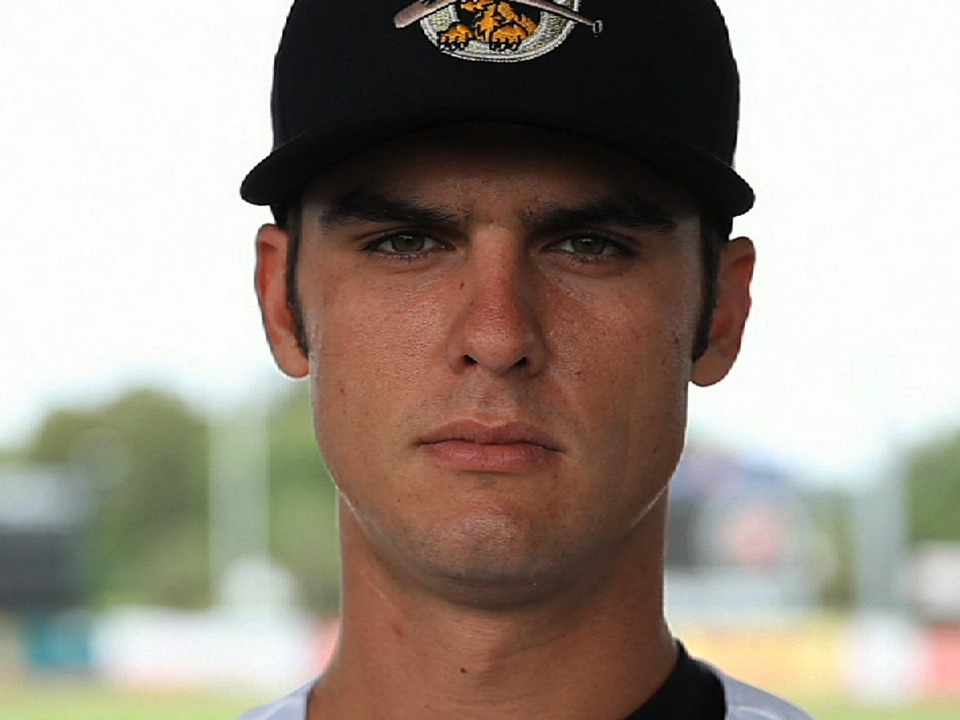
Gregory Paul Bird was born on November 9, 1992 in Aurora, Colorado. Bird spent his high school years at Grandview High School also in Aurora, Colorado where he was drafted out of high school by the New York Yankees. The Yankees too Bird in the 5th round of the 2011 MLB First Year Player's Draft in June of that year and Bird is currently in A Ball with the Charleston Riverdogs in the Yankees organization. There is some speculation that Bird will be promoted to AA Trenton with the Thunder for the start of the 2014 season to replace free agent Andrew Clark.
Bird was known for his big bat and monster power coming out of the draft and was handed down a big time signing bonus. Bird got the biggest bonus that the Yankees handed down in that draft, $1,100,000, to get him out of his commitment to the University of Arkansas. Bird was drafted as a catcher as he spent the bulk of him time behind the dish in High School but was immediately moved to first base when he made his professional debut.
Bird made his professional debut in 2011 with the Gulf Coast Yankees in the Rookie League but only got into four games and saw 13 at bats with the team. Bird's small sample size produced a .083/.154/.083 triple slash with only one hit, one walk, and four strike outs.
Bird stayed in the GCL with the Yankees for the 2012 season getting into 17 games and posting a triple slash of .286/.419/.367 with 14 hits. Two of those hits were doubles and one was a triple and while he was shut out of the home run column he knocked in five RBI's while taking 11 walks and striking out 13 times. Bird played catcher and first base for the GCL Yankees and did not commit an error behind the dish in three games while committing one error at first. Bird would be promoted to the Staten Island Yankees in the New York Penn League in 2012 and spent another 11 games and 47 plate appearances with the SI Yankees. Bird produced a triple slash of .400/.489/.650 after the promotion with two home runs, 16 hits, eight RBI's, four doubles, six walks, and ten strike outs. Bird committed one more error at first base in Staten Island posting a fielding percentage of .989.

Bird broke out last season while playing for the Charleston Riverdogs in Low A Ball posting a triple slash of .288/.428/.511 in his first full professional season. Bird played in 130 games and saw 573 plate appearances while hitting 20 home runs, knocking in 84 RBI's, took 107 walks, striking out 132 times, and hit 36 doubles and three triples en route to his 132 hit season. Bird had a career high in errors at first base, which was painful to watch at times, committing 11 errors and posting a .987 fielding percentage.
Bird is probably the best, or at least in consideration to be the best, first base prospect in all of baseball right now after his breakout season in 2013. In the minor leagues in 2013 looking at first basemen with a minimum of 400 plate appearances Bird is 7th in wRC+, which is 62% above league-average production. The six players ahead of him in wRC+ are all at least 25 years old and three of them are in the Mexican League. Of the five first basemen prospects at least with 400 plate appearances at age 20 or younger he was first in wRC+. Bird is being donned to the eventual replacement for Mark Teixeira when his mega contract expires and is widely considered the Yankees best first base prospect since Nick Johnson. I am glad that we are not putting any pressure on this guy at such a young age or anything.
Expected ETA: Mid to late 2016
Daniel "pinch-hitting" on the LoHud Blog
Everybody in TGP family needs to go check out this thought provoking article written by our very own Daniel Burch on the LoHud Yankees blog this morning! Good work Daniel!
Subscribe to:
Posts (Atom)